You type a prompt into an AI chatbot and receive an answer within seconds. That speed can make it easy to assume that creating the intelligence behind it is equally fast. In reality, training an AI model can take anywhere from a few minutes to several months, depending on what is being built. A small business model trained to classify customer reviews might finish during a lunch break, while a large foundation model can require enormous computing infrastructure and a lengthy development cycle.
For Indian students, developers, startups and businesses exploring artificial intelligence, understanding this difference matters. You may not need thousands of GPUs or months of training at all. In many practical projects, starting with an existing pre-trained model and adapting it through fine-tuning, retrieval or other techniques is far more realistic.
The important point is that “training time” is not one universal number. Model size, dataset size, hardware, training method and the number of experiments required all determine the final timeline.
AI Model Training Time: Quick Overview
| Type of AI Project | Approximate Training Timeline |
|---|---|
| Simple machine-learning model | Seconds to minutes |
| Small neural network | Minutes to hours |
| Image classification model | Hours to days |
| Small language model | Hours to days |
| Fine-tuning an existing LLM | Minutes to hours or days |
| LoRA/parameter-efficient tuning | Often hours |
| Large full-model fine-tuning | Hours to several days |
| Reinforcement fine-tuning | Hours to days or longer |
| Training a large LLM from scratch | Weeks to months |
| Data preparation | Days to months |
| Evaluation and testing | Hours to weeks |
| Complete production AI project | Often weeks or months |
Why Can AI Training Take So Long?
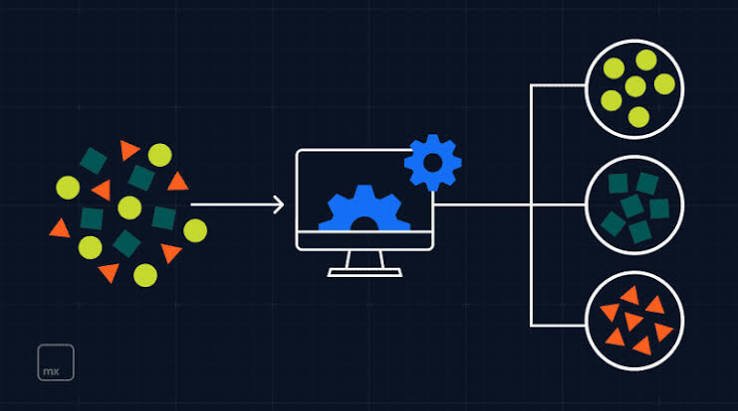
Training involves repeatedly showing data to a model, measuring its errors and adjusting its internal parameters so that future predictions improve.
For a small model, this may involve thousands or millions of calculations.
For modern large language models, the scale is dramatically greater. Models can contain billions of parameters and train across huge collections of text, code and other data.
These calculations must be performed repeatedly across specialised accelerators such as GPUs.
Even powerful hardware cannot make every workload instantaneous. Training also involves loading data, communicating between processors, saving checkpoints, validating performance and sometimes recovering from failures.
This is why the size of the model alone does not determine the clock time.
How Long Does a Simple Machine-Learning Model Take?
Traditional machine-learning models can be remarkably quick.
Suppose an Indian e-commerce business has a spreadsheet containing historical orders and wants to predict whether an order is likely to be returned.
A relatively simple classification model might train in seconds or minutes on an ordinary computer.
Other models trained on millions of records could require minutes or hours.
In these projects, training is often not the slowest part.
Collecting accurate data, removing duplicates, dealing with missing values and deciding which information should be used can consume far more time than the actual model training.
You could spend three days preparing the dataset and only 10 minutes training the final model.
How Long Does It Take to Train a Neural Network?
Neural-network training has an enormous range.
A small network for a university project could finish in minutes. A more demanding computer-vision system trained on a large image dataset might need hours or days on suitable GPUs.
Important variables include:
Dataset size: More examples generally require more computation per training epoch.
Model size: Larger networks require more mathematical operations.
Number of epochs: An epoch represents a full pass through the training dataset. More passes generally mean more training time.
Hardware: A suitable modern GPU can dramatically accelerate workloads that would take much longer on a CPU.
Batch size: This determines how many training examples are processed together and affects memory usage and training efficiency.
How Long Does Fine-Tuning an AI Model Take?
Fine-tuning can be dramatically faster than building a large model from scratch.
Instead of teaching the model language or general patterns from zero, you begin with a pre-trained model and adapt it for a particular task.
Depending on the model, method, dataset and available compute, an individual fine-tuning run can take minutes, several hours or multiple days.
Parameter-efficient approaches such as LoRA can reduce the amount of model information that needs to be updated during training, making adaptation of open models much more practical.
Modern hosted fine-tuning systems also separate the actual training time from other stages such as dataset validation, queueing, preparation and post-training evaluation. As a result, a job that performs four hours of actual training could take longer than four hours from submission to completion.
Why Data Preparation Often Takes Longer Than Training
This is one of the biggest surprises for beginners.
Imagine building an AI system to answer customer questions for an Indian insurance company.
You cannot simply dump thousands of random documents into a folder and expect an accurate production system.
The team may need to remove outdated information, correct mistakes, standardise formats, protect sensitive data, label examples and separate training data from evaluation data.
Poor-quality training examples can teach the model poor behaviour.
Modern fine-tuning guidance consequently places considerable importance on data quality, balance and diversity, rather than simply adding as many examples as possible.
A technically successful three-hour training run can still produce a useless model if the underlying dataset is bad.
How Long Does It Take to Train a Large Language Model From Scratch?
This is where timelines become much larger.
Training a major foundation model from scratch can involve weeks or months of computational work, using large clusters of specialised accelerators.
But the complete development timeline is even longer.
Before the main training run, researchers have to collect and process enormous datasets, design the architecture, conduct smaller experiments and configure distributed infrastructure.
After training, teams still need to evaluate capabilities, investigate failures, improve safety and prepare the system for deployment.
Therefore, statements such as “this AI took three months to train” may describe only one portion of a much larger development programme.
Does More GPUs Mean Faster Training?
Generally yes, but the relationship is not perfectly linear.
If one GPU takes eight days, eight GPUs will not necessarily finish the same workload in exactly one day.
Multiple GPUs must exchange information while training. That communication introduces overhead.
Efficient distributed training therefore requires suitable networking, software and model architecture.
At very large scales, organisations use hundreds or thousands of accelerators working together. Keeping that infrastructure operating efficiently becomes an engineering challenge of its own.
This is one reason training frontier-scale models is expensive and technically difficult.
Can You Train an AI Model on a Normal Laptop?
Yes—depending on what you mean by AI model.
You can train many traditional machine-learning algorithms and small neural networks on a regular laptop.
Students learning AI should absolutely start this way.
Training a modern billion-parameter language model from scratch on an ordinary laptop, however, is generally impractical.
For larger workloads, developers commonly use local GPUs, cloud GPU services or specialised AI infrastructure.
You also do not necessarily need to train anything.
For many business applications, using an existing model with good prompting, retrieval-augmented generation (RAG) or an API can solve the problem more efficiently than creating a custom model.
Training Time Is Not the Same as Project Time
Suppose a startup says its model required six hours to train.
That does not mean the company built its AI product in six hours.
A realistic workflow may involve collecting data for two weeks, cleaning it for several days, running an initial training experiment, evaluating the results, finding weaknesses, improving the dataset and training again.
Several versions may be tested before one is suitable for deployment.
Evaluation is particularly important. A lower training loss does not automatically mean the model will perform reliably on real users’ questions.
Production teams must test the behaviours that actually matter.
How Can AI Training Be Made Faster?
Start by choosing the smallest model that can reliably perform the required task.
A business should not automatically choose a huge language model for a problem that a small classifier can solve.
Clean the dataset before launching expensive experiments.
Use GPU acceleration when the workload benefits from it and consider parameter-efficient techniques rather than full fine-tuning.
Run smaller experiments first. If a configuration performs badly after a short test, discovering that early can save hours or days of expensive computation.
Most importantly, define what success means before training.
If you cannot measure whether the new model is better than the existing solution, faster training will not solve the real problem.
FAQs
Q1. Can an AI model be trained in one day?
A. Yes. Small machine-learning models and many fine-tuning jobs can finish within one day, and some complete in minutes. Larger models and datasets may require days, weeks or considerably longer.
Q2. How long does it take to train an AI chatbot?
A. It depends on the approach. Customising an existing model for a chatbot can sometimes take hours or days, while developing a powerful general-purpose language model from scratch can require months of broader development work.
Q3. What takes longer: preparing data or training the model?
A. For many real-world AI projects, data preparation and evaluation can take longer than the actual training run. Cleaning, labelling and validating data are major parts of building a reliable model.
Q4. Do I need expensive GPUs to train an AI model?
A. Not always. Traditional machine-learning models and small neural networks can run on ordinary computers. Large deep-learning models benefit heavily from GPUs, while training frontier-scale models requires specialised large-scale infrastructure.