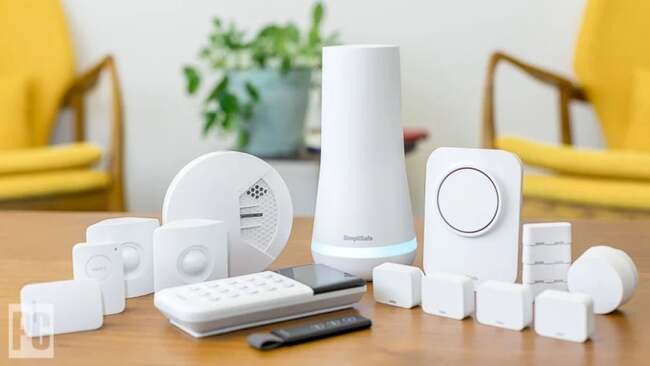
A smart camera may still switch on perfectly after six years, a video doorbell may continue ringing, and a smart speaker may sound as good as the day you bought it. But there is another question that matters more: is the manufacturer still supporting the software behind it? Unlike an ordinary bulb or doorbell, a connected device depends on firmware updates, security patches, apps, cloud servers and compatibility with other smart-home platforms.
For Indian buyers building a connected home, this is especially important because smart cameras, locks, speakers and hubs are often expected to last for many years. In practice, many smart-home products receive security or software support for roughly 4–5 years or longer, but there is no universal lifespan. Policies vary significantly by manufacturer and device. For example, Google currently promises at least five years of critical security updates for Nest connected-home devices from the date it starts selling them, while Ring promises qualifying devices at least four years of software security updates from purchase or until a published support date, whichever applies.
The useful lesson is simple: check the support policy before buying, not when the updates stop.
Smart Home Device Support: Quick Overview
| Device/Support Factor | What to Expect |
|---|---|
| Typical connected device | Support period varies by manufacturer |
| Google Nest security updates | At least 5 years from first sale |
| Ring security updates | At least 4 years for qualifying purchases or stated date |
| Smart speakers | Often supported for several years |
| Security cameras | Security support is especially important |
| Smart locks | Avoid using unsupported connected models |
| Smart hubs | Compatibility can matter as much as hardware life |
| Physical device lifespan | May exceed software-support period |
| Cloud-dependent devices | Can lose features if service ends |
| Local-control devices | May retain more functionality |
| Automatic updates | Keep enabled where possible |
| Buying older models | Check remaining support before purchase |
Why Hardware Life and Support Life Are Different
A smart device can physically last much longer than its guaranteed software-support period.
Imagine buying a Wi-Fi camera in 2026. Its sensor, microphone and electronics might still function in 2032. But if the manufacturer has stopped providing security updates, the camera could become a less attractive device to keep connected to your home network.
Support can include several different things:
Security updates fix vulnerabilities.
Firmware updates can improve reliability and device behaviour.
App support keeps the device controllable from newer smartphones.
Cloud support enables features such as remote access, recordings and voice control.
Compatibility updates help the product continue working with changing smart-home ecosystems.
A product can lose one of these while retaining others.
How Long Does Google Support Nest Devices?
Google currently commits to providing automatic critical security updates for Nest connected-home devices for at least five years from the date it starts selling the product on the US Google Store.
Importantly, the five-year period is tied to the product’s original sale date—not necessarily the date you personally buy it.
That distinction matters when purchasing an older model at a heavy discount.
Suppose a Nest device first went on sale four years ago and you find unopened stock today. You should not automatically assume your purchase starts another fresh five-year guaranteed security-support period.
Google publishes minimum security-update dates for individual products, making those dates worth checking before buying an older model.
How Long Are Ring Devices Supported?
Ring uses a somewhat different approach.
Its current policy says eligible Ring devices purchased new from specified official channels receive software security updates for at least four years from purchase, or until the published support date for that model if that date is later.
Ring also publishes minimum security-update dates for individual cameras and video doorbells.
Some newer models already have published support dates extending well into the next decade.
Ring notes that it may continue providing updates beyond the minimum period when technically possible, but buyers should treat the guaranteed period as the dependable baseline rather than assuming indefinite support.
What About Smart Speakers?
Smart speakers can remain useful for a surprisingly long time, but their dependence on software makes support important.
A connected speaker is not simply an audio device. Voice recognition, streaming integration, smart-home control and internet services depend heavily on the manufacturer’s software ecosystem.
Apple, for example, continues publishing HomePod software releases covering performance, stability and feature improvements. However, the practical support timeline should be checked for the particular model rather than assuming that every smart speaker receives a fixed number of years.
This is especially important when buying discontinued smart speakers second-hand.
A speaker that costs ₹2,000 less but is already several generations old may not provide better long-term value.
Why Security Cameras Need Extra Attention
An unsupported smart bulb is inconvenient.
An unsupported internet-connected security camera can be a more serious concern.
Cameras and video doorbells may process sensitive information such as video, audio and activity around your home.
For these devices, security-support duration should be treated as a major buying specification, alongside resolution, night vision and storage.
Before buying a camera, ask:
How long are security updates guaranteed?
Does the manufacturer publish an end-of-support date?
Can the camera work locally if cloud services change?
Does it require a paid subscription for important features?
Does the manufacturer have a clear security-update process?
A cheap camera from an unknown brand becomes less attractive if there is no transparent update commitment.
What Happens When Support Ends?
“End of support” does not always mean the device instantly stops working.
A smart bulb might continue switching on and off. A camera could continue displaying video. A speaker may still play music.
The problem is what happens afterwards.
New security vulnerabilities may no longer be patched. The companion app could eventually stop supporting the device. Changes to operating systems or smart-home platforms may break integrations.
For cloud-dependent products, discontinuation of the manufacturer’s servers can potentially remove important functionality entirely.
This is why an unsupported smart device should not be treated exactly like an old offline appliance.
Can Matter Make Smart Devices Last Longer?
The Matter smart-home standard can improve interoperability between compatible products and ecosystems, reducing some dependence on proprietary integrations.
Matter also supports local IP-based connectivity for compatible smart-home functions.
However, Matter does not guarantee unlimited product support.
The device still contains firmware that may need security updates. Its manufacturer still controls the hardware and its ongoing software maintenance.
Some advanced features may also remain dependent on the manufacturer’s own app or cloud services.
Therefore, a Matter logo is useful for compatibility, but it does not replace checking the manufacturer’s update policy.
Should You Replace a Device When Updates Stop?
Not automatically—but assess the risk.
For a simple smart plug operating a lamp on an isolated network, your decision may be different from one involving a front-door camera or smart lock.
Security-sensitive devices deserve greater caution.
If a camera, lock, alarm or hub has reached end of support and remains internet-connected, replacing it with a currently supported model may be sensible.
Before discarding an old device, factory-reset it according to the manufacturer’s instructions and remove it from your smart-home account.
Also remember to dispose of electronic products responsibly through appropriate e-waste channels.
How to Buy Smart Home Devices That Last Longer
Do not choose smart devices purely according to the number of features printed on the box.
Look for manufacturers that clearly publish security-update policies.
Check the product’s original release date, particularly when buying discounted older stock.
Prefer devices that use established standards such as Matter where appropriate and investigate whether essential functions can continue locally if internet access is unavailable.
For cameras and doorbells, understand whether recording requires cloud storage and whether a subscription is needed.
Keep automatic firmware updates enabled after installation and protect the associated account with a strong unique password and two-factor authentication where available.
For Indian households gradually building a smart home, consistency can also help. Buying well-supported products from established ecosystems may reduce the compatibility problems created by maintaining a dozen unrelated apps from unknown manufacturers.
The practical rule is to think beyond whether the hardware will physically survive five or ten years. Ask whether the software, security and services around it are likely to remain dependable for the period you expect to use it.
FAQs
1. Do smart home devices stop working when software support ends?
A. Not necessarily. Many continue performing basic functions, but they may stop receiving security patches, compatibility fixes or new features. Cloud-dependent functionality could also be affected later.
2. How long should a good smart home device receive security updates?
A. There is no universal requirement across every product and market. As a practical benchmark, look for manufacturers offering a clearly stated multi-year commitment, ideally around five years or longer for devices you plan to keep long term.
3. Is it safe to buy an older smart device at a discount?
A. It can be, but check its remaining support period first. Some manufacturers calculate guaranteed updates from the product’s original launch or sale date, meaning old stock may have fewer guaranteed support years remaining.
4. Which devices should be replaced first after support ends?
A. Prioritise security-sensitive, internet-connected products such as cameras, video doorbells, smart locks, alarm equipment and important smart-home hubs. The risk from an unsupported decorative smart bulb is generally different from an unsupported device protecting or monitoring your home.