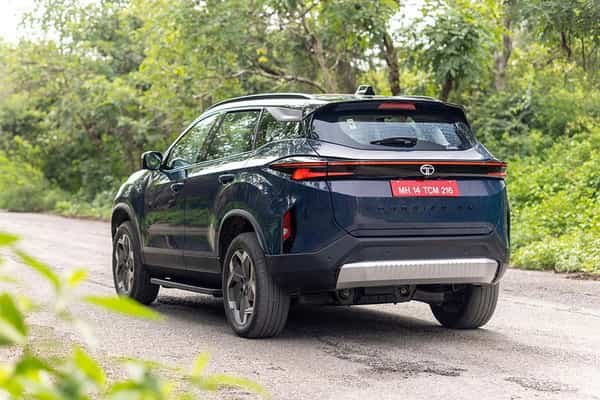
The cars in India with the largest boot space are led by the Tata Sierra at a claimed 622 litres and the MG Hector at about 587 litres, followed by the Hyundai Verna (528 litres), the Skoda Slavia and Volkswagen Virtus (521 litres each), the Citroën C3 Aircross (511 litres), the Honda City (506 litres), and the Tata Curvv (500 litres). That’s an impressive amount of luggage room, and several of these cars cost well under ₹20 lakh. Boot space is one of the most underrated parts of a car purchase: a roomy boot decides whether the whole family’s bags, a pram, and weekend shopping fit without folding seats or strapping things to the roof. The figures below are manufacturer claims in litres, which can differ slightly between sources, so check them against your own luggage on a test drive. Prices are approximate ex-showroom figures and vary by city and variant.
How to Read Boot Space Numbers
- Litres measure volume, not usability. A tall, narrow boot with 400 litres can hold less real luggage than a wide, flat boot with 380.
- Shape and opening matter. A wide opening with a low loading lip makes heavy bags easier to load.
- The spare wheel’s position can eat into capacity, and moving it beneath the car, as Tata did with the Sierra, frees up space.
- Sedans versus SUVs: sedans often have large, deep boots but a smaller opening, while SUVs offer a taller, easier-to-load space.
- Folding rear seats (usually a 60:40 or 40:20:40 split) multiply your capacity for long items.
- Three-row cars have a much smaller boot when all seats are in use, often only 150 to 250 litres.
- Electric cars may add a small front storage space (a “frunk”) on some models.
The Ten Cars
Tata Sierra (about 622 litres; from about ₹11.5 lakh)
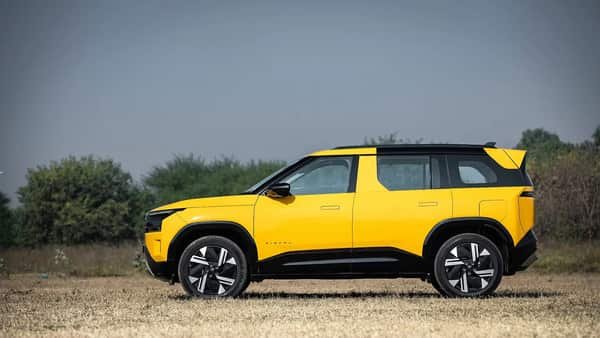
- Why it leads: by moving the spare wheel under the floor, Tata has created one of the largest boots among mid-size SUVs, while the rest of the car is spacious and well finished.
- Best for: families who need to carry a lot on road trips.
- Keep in mind: the best-equipped trims climb well past ₹20 lakh.
MG Hector (about 587 litres; from about ₹12 lakh)
- Why it stands out: a huge boot that overshadows many larger vehicles, in a roomy five-seat SUV with a feature-rich cabin.
- Best for: buyers who prioritise luggage and cabin space.
- Keep in mind: the six- and seven-seat Hector Plus has far less boot space, around 155 litres with all rows up.
Hyundai Verna (about 528 litres; from about ₹11 lakh)
- Why it stands out: the largest boot among mainstream mid-size sedans, with a refined cabin, spacious rear seats, and a 5-star Global NCAP rating reported.
- Best for: sedan lovers who need serious luggage room.
- Keep in mind: the sedan’s boot opening is smaller than an SUV’s tailgate.
Skoda Slavia and Volkswagen Virtus (about 521 litres each; from about ₹10.3 to 11.6 lakh)
- Why they stand out: the boot easily swallows a full suitcase set along with soft bags, and both sedans offer strong driving dynamics and 5-star Global NCAP ratings.
- Best for: drivers who want boot space with a fun drive.
- Keep in mind: higher variants cost more than some SUV rivals.
Citroën C3 Aircross (about 511 litres; from about ₹8.3 lakh)
- Why it stands out: a roomy five-seat boot in a comfortable, softly sprung SUV, with a more budget-friendly entry price.
- Best for: families who want comfort and luggage space on a modest budget.
- Keep in mind: the seven-seat version has much less boot space with the third row in use.
Honda City (about 506 litres; from about ₹11.8 lakh)
- Why it stands out: a spacious boot that comfortably holds three medium bags and soft bags, combined with a class-best rear seat and a refined drive.
- Best for: buyers who want a sedan that is comfortable for adults and generous with luggage.
- Keep in mind: the hybrid version gives up some boot space to the battery.
Tata Curvv and Curvv EV (about 500 litres; from about ₹9.7 lakh for the petrol, and about ₹17.5 lakh for the EV)
- Why they stand out: a stylish coupe-SUV with a surprisingly practical boot, in both combustion and electric versions.
- Best for: buyers who want style without giving up luggage space.
- Keep in mind: the sloping roofline affects rear headroom for tall passengers.
MG Astor (about 488 litres)
- Why it stands out: a compact SUV with a generous boot for its size and a feature-rich cabin.
- Best for: small families who want an easy-to-park SUV with real luggage room.
Honda Elevate (about 458 litres; from about ₹11.9 lakh)
- Why it stands out: a big boot for a mid-size SUV, high ground clearance of 220 mm, and a comfortable, well-packaged cabin.
- Best for: families who want a high-riding SUV with practicality.
Hyundai Creta (about 433 litres; from about ₹10.7 lakh)
- Why it stands out: a well-rounded family SUV with a refined ride, a usable boot, and a wide range of engines and gearboxes.
- Best for: buyers who want an all-rounder.
Other Notable Options
- Citroën Basalt (about 470 litres): a coupe-SUV with a big boot and a comfortable ride.
- Tata Safari: boot space is reported at around 420 litres with the third row up in some listings and much lower in others, so check it yourself before relying on the figure.
- Skoda Octavia and Superb: larger sedans with boots around 600 litres or more, at higher prices.
- Maruti Suzuki Wagon R: a tall, deep boot that is surprisingly practical for a budget hatchback.
- Tata Altroz: often cited for strong luggage capacity among premium hatchbacks.
Boot Space in Small and Compact Cars
- Hatchbacks: typically 250 to 350 litres, enough for daily use and a couple of bags.
- Compact SUVs: often 330 to 450 litres.
- Sub-compact sedans: boots around 380 litres in cars like the Maruti Dzire, which is large for the price.
- Seven-seaters: capacity drops sharply with all seats up, so families who need both seven seats and luggage should consider roof carriers, towbars, or a larger vehicle.
Choosing by Need
Weekly shopping and daily use: most hatchbacks and compact SUVs are enough.
Family road trips: look for 450 litres or more, such as the Sierra, Hector, Verna, Slavia, Virtus, City, or Curvv.
Airport runs with large suitcases: a sedan’s deep boot or an SUV’s wide, tall opening can both work, so test with your largest bags.
Strollers and sports gear: look for a wide opening, a low loading lip, and folding rear seats.
Large families who need seven seats: accept that luggage room will be limited, or choose a bigger MPV or SUV and plan for a roof carrier.
Electric car buyers: compare the boot with the battery’s position, and check for extra storage under the bonnet.
Practical Tests to Do at the Showroom
- Bring your luggage. Try your actual suitcases, a pram, or sports bags.
- Check the loading lip and how high you must lift bags.
- Test the opening width with your biggest item.
- Fold the seats and see how flat the floor is.
- Look for hooks, nets, and under-floor storage.
- See if the tailgate is power-operated, which helps when your hands are full.
- Check the boot with the rear seats occupied, for example with child seats in place.
- Think about the spare wheel: a full-size spare may reduce space, while a puncture repair kit leaves more.
Costs and Other Considerations
- Larger boots often come with larger cars, which cost more to buy, insure, and park.
- On-road price: registration, road tax, and insurance typically add 10% to 15% to the ex-showroom figure.
- Fuel and efficiency: bigger vehicles may be less efficient, so compare running costs.
- Safety and comfort: don’t let boot space override crash-test ratings, ride comfort, or rear-seat room.
- Financing: calculate the total repayment, not just the EMI.
- Service network and resale matter too.
Frequently Asked Questions
Q1. Which car has the biggest boot in India?
A. Among mainstream cars, the Tata Sierra has a claimed boot capacity of around 622 litres, while the MG Hector offers approximately 587 litres. Some larger and more expensive cars can also provide substantial luggage capacity, so comparisons should consider vehicle type and price segment.
Q2. Which sedan has the largest boot?
A. Among mainstream sedans, the Hyundai Verna offers around 528 litres of boot space, while the Skoda Slavia and Volkswagen Virtus each provide approximately 521 litres.
Q3. Which affordable car has a big boot?
A. Cars such as the Citroën C3 Aircross, Tata Curvv, and Maruti Suzuki Dzire offer useful luggage capacity at relatively accessible price points. The Maruti Suzuki Wagon R is another practical option for buyers prioritising everyday utility.
Q4. Is more boot space always better?
A. Not necessarily. The quoted capacity in litres is only one factor. Boot shape, loading height, opening width, wheel-arch intrusion, split-folding rear seats, and underfloor storage can significantly affect how useful the luggage area is in everyday situations.
Q5. Why is the boot so small in 7-seater cars?
A. In most 7-seaters, the third-row seats occupy space that would otherwise be available for luggage. As a result, boot capacity can be limited when all seats are in use but increases substantially when the third row is folded.