The cars in India with the highest ground clearance among mainstream models are led by the Force Gurkha at about 233 mm, followed by the Mahindra Thar and Thar Roxx at 226 mm, the Toyota Fortuner at about 225 mm, the Honda Elevate at 220 mm, and a cluster of capable SUVs around 205 to 210 mm, including the Maruti Jimny, Victoris, Grand Vitara, Toyota Hyryder, and Tata Nexon. Ground clearance matters in India because roads vary from smooth expressways to broken lanes, speed breakers, waterlogged streets, and hill tracks, and a few extra millimetres can be the difference between gliding over an obstacle and scraping the underbody. The numbers below are manufacturer-quoted figures that vary a little between sources and variants, so treat them as a guide and confirm them with the dealer. Prices are approximate ex-showroom figures and vary by city and variant.
What Ground Clearance Actually Means
- Definition: the vertical gap between the ground and the lowest point of the car’s underside, usually measured when the vehicle is unladen.
- Loaded vs. unladen: with passengers and luggage, the suspension compresses and the effective clearance falls, sometimes by 20 mm or more.
- Where it’s measured: it’s the lowest rigid point, such as the exhaust, sump guard, or suspension arms, not the body panel.
- It isn’t everything: approach, departure, and breakover angles, wheel travel, tyre size, and underbody protection also decide how well a car handles rough ground.
- Special cases: vehicles with adjustable air suspension can raise or lower themselves, so their quoted figure is a range.
Why It Matters on Indian Roads
- Speed breakers and potholes: a higher floor reduces scraping and the risk of damaging the underbody.
- Waterlogging: more clearance helps in monsoon flooding, though wading depth and air-intake height matter more for deep water.
- Rural and hill roads: uneven surfaces, ruts, and rocks are easier to clear.
- Confidence: a high seating position and ground clearance make many drivers feel more in control on bad roads.
- Loaded trips: with a full family and luggage, a bit of extra clearance protects against bottoming out.
The Ten Cars
Force Gurkha (about 233 mm; from about ₹16 to 18 lakh)
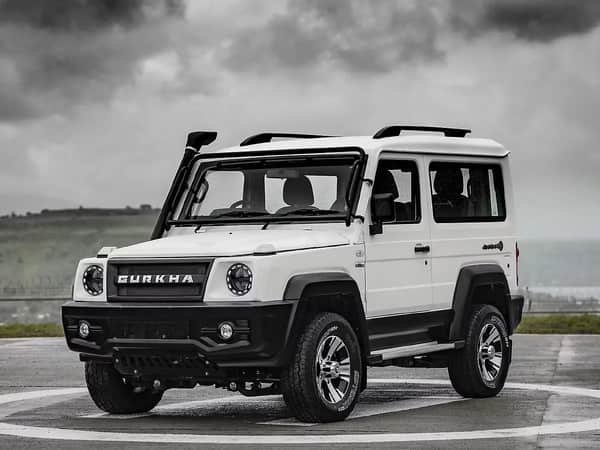
- Why it leads: the highest ground clearance among mainstream Indian SUVs, in a purpose-built four-wheel-drive off-roader with locking differentials and a 2.6-litre diesel engine.
- Available as: three-door and five-door versions.
- Keep in mind: basic comfort and features, and a rugged, utilitarian feel.
Mahindra Thar and Thar Roxx (about 226 mm; roughly ₹10 to 17 lakh and higher for the Roxx)
- Why it stands out: lifestyle off-roaders with real capability, available with four-wheel drive, and a choice of three-door (Thar) and five-door (Roxx) bodies, with the Roxx adding practicality and a plusher cabin.
- Keep in mind: a firm ride on rough roads and modest fuel efficiency.
Toyota Fortuner (about 225 mm; from about ₹34 lakh)
- Why it stands out: a full-size ladder-frame SUV with a commanding stance, a strong diesel engine, and a reputation for toughness and dependability.
- Keep in mind: a large size and a high price.
Honda Elevate (about 220 mm; from about ₹11.9 lakh)
- Why it stands out: among the highest clearance of any mid-size SUV, with a comfortable, well-packaged cabin and a refined drive.
- Keep in mind: it’s front-wheel drive only, so its capability is about clearing obstacles on-road, not serious off-roading.
Maruti Suzuki Jimny (about 210 mm; from about ₹12.3 lakh)
- Why it stands out: a compact four-wheel-drive off-roader with excellent approach and departure angles, a lightweight body, and genuine trail ability.
- Keep in mind: a small boot, a basic cabin, and a firm ride.
Maruti Suzuki Victoris, Grand Vitara, and Toyota Urban Cruiser Hyryder (about 210 mm; from about ₹10.5 lakh and up)
- Why they stand out: mid-size SUVs that combine high clearance with comfortable cabins, strong-hybrid options, and, in some versions, an all-wheel-drive system.
- Keep in mind: they’re built for roads and light trails rather than hard off-roading.
Tata Nexon (about 208 mm; from about ₹7.3 lakh)
- Why it stands out: one of the highest-riding compact SUVs, with a 5-star Global NCAP rating, a solid build, and petrol, diesel, and CNG options.
- Keep in mind: the electric Nexon has a lower reported clearance of around 190 mm.
Kia Sonet (about 205 to 211 mm, depending on the source; from about ₹7.4 lakh)
- Why it stands out: a compact SUV with generous clearance, a long equipment list, and a range of engines and automatic gearboxes.
- Keep in mind: rear space is average.
Nissan Magnite and Renault Kiger (about 205 mm; from about ₹6.1 to 6.3 lakh)
- Why they stand out: among the most affordable SUVs with 205 mm of clearance, with CVT and AMT automatic options, and, in the Kiger, a 405-litre boot.
- Keep in mind: engines are small three-cylinder units, which feel strained when fully loaded.
Mahindra XUV 3XO (about 201 mm; from about ₹7.3 to 7.8 lakh)
- Why it stands out: a feature-packed compact SUV with a punchy turbo engine and a high stance for its class.
- Keep in mind: a firm ride and a smaller boot than some rivals.
The Extremes: Premium and Specialist Vehicles
- Jeep Wrangler (about 237 mm) and Toyota Land Cruiser (about 235 mm): serious off-roaders at much higher prices.
- Isuzu D-Max V-Cross (about 225 mm) and Isuzu MU-X (about 230 mm): rugged lifestyle pickups and SUVs.
- Land Rover Defender (about 218 mm normally, up to about 323 mm with its air suspension raised in the Octa version): the highest adjustable clearance on sale, at a very high price.
What About Ordinary Cars and Hatchbacks?
- Many small cars sit around 165 to 185 mm, which is adequate for typical city roads.
- Micro-SUVs like the Tata Punch offer around 187 mm, and mid-size SUVs like the Hyundai Creta offer about 190 mm.
- The Maruti Brezza offers about 198 mm.
- For most drivers, anything above roughly 180 to 200 mm is enough for speed breakers and typical bad roads, with more only needed for rough tracks and flooding.
Trade-Offs of High Ground Clearance
- A higher centre of gravity can mean more body roll in corners, though modern suspension tuning reduces it.
- Slightly lower fuel efficiency, because of greater height, aerodynamic drag, and often a heavier build.
- More effort to get in and out, especially for older passengers.
- Stability at highway speeds may be a touch less planted than lower cars, though good engineering offsets this.
- Costs: capable off-roaders cost more to buy and run.
How to Choose
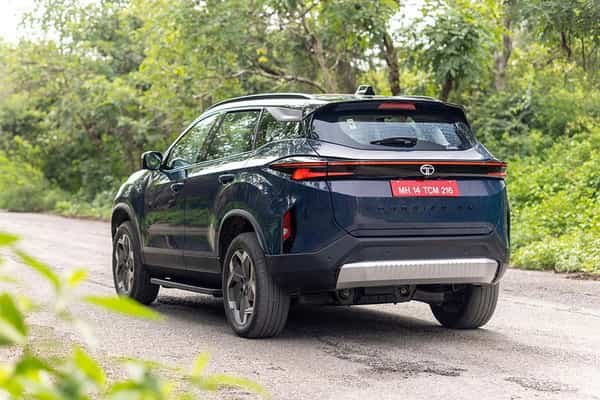
Daily city driving on bad roads: a compact SUV with about 190 to 210 mm, such as the Nexon, Sonet, Magnite, or Kiger, is usually plenty.
Family use with mixed roads: a mid-size SUV like the Elevate, Victoris, Grand Vitara, or Hyryder gives high clearance plus comfort.
Hill trips and rough tracks: consider the Jimny, Thar, or Gurkha, ideally with four-wheel drive, and think about low-range gearing.
Heavy-duty or professional use: the Fortuner, Gurkha, or Isuzu models offer ladder-frame toughness.
Highway-heavy use: don’t chase clearance at the expense of stability and comfort, and check the car’s ride at speed.
Practical Tips
- Check the loaded figure. Ask how much clearance remains with a full load.
- Look at the underbody. Check the protection around the engine, fuel tank, and exhaust.
- Choose suitable tyres, since tyre size and sidewall height affect clearance and ride.
- Don’t modify blindly. Raising a car with aftermarket kits can affect handling, safety, and legality, so use only approved, appropriate changes.
- Know the wading depth if you drive through floods, and avoid deep water.
- Drive slowly over bad patches, whatever the clearance.
- Test drive on a rough road to feel how the car copes.
- Compare the approach, departure, and breakover angles if you plan any off-road use.
- Remember that on-road prices are typically 10% to 15% above ex-showroom.
Frequently Asked Questions
Q1. Which car has the highest ground clearance in India?
A. Among mainstream SUVs, the Force Gurkha leads with about 233 mm, while the Land Rover Defender can reach up to about 323 mm with its air suspension raised, at a much higher price.
Q2. Which affordable car has high ground clearance?
A. The Nissan Magnite, Renault Kiger, Tata Nexon, and Kia Sonet offer around 205 to 210 mm starting near ₹6 to 7 lakh.
Q3. Is 200 mm ground clearance enough for Indian roads?
A. For most drivers, yes, since it handles speed breakers and typical bad roads well, though rough tracks and flooding may call for more.
Q4. Does higher ground clearance reduce stability?
A. It raises the centre of gravity, which can add body roll, but modern suspension tuning keeps most compact SUVs stable at normal speeds.
Q5. Does ground clearance change with load?
A. Yes, the suspension compresses when you carry passengers and luggage, which reduces the effective clearance.