The top cars in India with ADAS (advanced driver-assistance systems) start with the Honda Amaze, the cheapest car with Level 2 features at around ₹10 lakh, and extend through the Mahindra XUV 3XO, Honda City, Tata Nexon, Kia Sonet, Honda Elevate, Hyundai Creta, Maruti Suzuki Victoris, and Kia Seltos, up to the Tata Harrier and Safari for buyers who want the most complete suites. ADAS uses cameras and radar to watch the road, warn you of danger, and in some cases brake or steer on your behalf, and what used to be a luxury-car feature now appears on compact SUVs and even a compact sedan. The suites differ widely in what they include and where in a model’s range they appear, so the right way to shop is to check the exact variant and test the system on real roads. Prices below refer to approximate ex-showroom costs of ADAS variants based on recent listings, and they vary by city and change as variants are reshuffled, so confirm with a dealer.
What ADAS Actually Does
ADAS is a group of features that help you avoid mistakes. Common ones include:
- Forward collision warning (FCW): alerts you if you’re closing too fast on a vehicle or obstacle.
- Autonomous emergency braking (AEB): brakes automatically if you don’t react in time.
- Adaptive cruise control (ACC): maintains a set speed and a safe gap from the vehicle ahead, slowing and speeding up with traffic. Some versions work in stop-and-go traffic.
- Lane departure warning and lane keep assist: warn you or gently steer you back if you drift out of your lane.
- Blind-spot detection: alerts you to vehicles in your blind spot.
- Rear cross-traffic alert: warns you of approaching vehicles when you reverse out of a parking spot.
- High-beam assist: switches between high and low beams automatically.
- Driver attention monitoring: warns you if you seem drowsy or distracted.
- Traffic sign recognition, on some cars.
Level 1 vs. Level 2
- Level 1 offers a single assistance feature at a time, such as collision warning, lane keeping, or adaptive cruise.
- Level 2 combines steering and speed assistance, for example adaptive cruise control with lane centring, so the car can help with both at once on well-marked roads.
- In both cases, you must remain in control. These are driver aids, not self-driving systems, and your hands should stay on the wheel and your eyes on the road.
The Ten Cars
Honda Amaze, ZX variant (about ₹9.7 to 10 lakh)
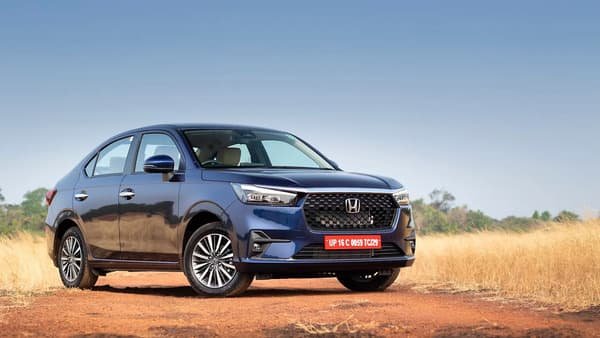
- Why it leads on value: the most affordable car with Level 2 ADAS, and the only sub-4-metre sedan offering a full suite, using a camera-based system with adaptive cruise control, lane keep assist, and collision mitigation braking. It also has six airbags and a 5-star Bharat NCAP rating.
- Best for: budget-conscious buyers who want advanced safety in a compact sedan.
Mahindra XUV 3XO (ADAS variants from about ₹12 lakh)
- Why it stands out: a compact SUV with Level 2 features such as forward collision warning, automatic emergency braking, and lane-keeping assistance, and a 5-star Bharat NCAP result reported.
- Best for: buyers who want one of the most affordable ADAS-equipped SUVs, with strong performance.
Honda City (ADAS variants from about ₹12.7 lakh)
- Why it stands out: Honda Sensing adaptive cruise control, lane keep assist, and road-departure mitigation on the V, VX, and ZX trims, in a comfortable, refined sedan with a spacious rear seat.
- Best for: sedan lovers who want ADAS and comfort.
Tata Nexon (Fearless+ PS and higher, from about ₹13.5 to 14 lakh)
- Why it stands out: Level 2 ADAS in a compact SUV with a 5-star crash-test rating, six airbags, and a solid build.
- Best for: buyers who want strong safety plus ADAS in a practical compact SUV.
- Keep in mind: ADAS is limited to specific top variants, so check the engine and gearbox pairing.
Kia Sonet (ADAS variants from about ₹13.5 lakh)
- Why it stands out: a stylish compact SUV with a camera-based Level 1 ADAS suite on higher variants, a long equipment list, and a range of engines and gearboxes.
- Best for: buyers who want a loaded compact SUV with entry-level driver assistance.
Honda Elevate (ZX variant, from about ₹15 lakh)
- Why it stands out: Level 2 Honda Sensing in a mid-size SUV with a large boot and 220 mm of ground clearance.
- Best for: families who want ADAS in a practical, comfortable SUV.
Hyundai Creta (SX(O) and higher, from about ₹17.5 lakh)
- Why it stands out: Level 2 SmartSense ADAS paired with a 360-degree camera, a refined ride, and a 5-star Bharat NCAP rating reported.
- Best for: buyers who want the segment benchmark with advanced features.
Maruti Suzuki Victoris (ADAS variants on higher trims)
- Why it stands out: the first Maruti with Level 2 ADAS, in a roomy, efficient SUV with an excellent crash-test score reported.
- Best for: buyers who want ADAS with Maruti’s service network and strong efficiency.
Kia Seltos (GTX+ and X-Line, from about ₹19 to 19.5 lakh)
- Why it stands out: a Level 2 suite with a large number of features, reported at 17, in a stylish, comfortable mid-size SUV.
- Best for: buyers who want a feature-rich SUV with a broad ADAS suite.
Tata Harrier and Tata Safari (ADAS variants from about ₹16 lakh upwards)
- Why they stand out: Level 2 ADAS on larger SUVs with top-tier crash-test scores, six airbags, and strong build quality, in five-seat (Harrier) and three-row (Safari) forms.
- Best for: families who want the most comprehensive safety package in a big SUV.
More Cars With ADAS
- Tata Curvv and Curvv EV: Level 2 on higher trims.
- Mahindra XUV 7XO, XUV700, and Thar Roxx: ADAS on top variants.
- Hyundai Verna and Venue: ADAS on upper trims.
- Toyota Innova Hycross and Maruti Invicto: ADAS on higher variants.
- MG Astor, MG Hector, and MG ZS EV: pioneered Level 2 ADAS in the mass market.
- Electric cars: Mahindra BE 6 and XEV 9e, with different ADAS levels across trims.
What ADAS Can and Can’t Do in India
The strengths:
- It can reduce the risk of rear-end collisions and distracted-driving accidents.
- Adaptive cruise control eases highway and expressway driving.
- Blind-spot and rear cross-traffic alerts help in crowded cities and parking lots.
The limits to know:
- Lane markings: lane-keeping systems rely on clear markings, which may be faded or absent on many Indian roads.
- Mixed traffic: two-wheelers, pedestrians, animals, and unpredictable behaviour can confuse sensors.
- Weather and dirt: rain, fog, glare, and dirty sensors reduce performance.
- Potholes and construction zones can trigger false warnings.
- Occasional false alerts or braking can happen, so stay alert.
- Driver responsibility: hands on the wheel and eyes on the road remain essential.
What to Check Before You Buy
- Which variant has ADAS, and what it costs compared with the one below it.
- Which features are included: not every suite has AEB, adaptive cruise, lane centring, and blind-spot detection.
- Camera-only or camera plus radar: radar-based systems often perform better in poor visibility.
- Whether adaptive cruise works in stop-and-go traffic.
- How easy it is to adjust or switch off features, since you may want to tailor the sensitivity.
- Other important safety equipment, including airbags, ESC, and crash-test results.
- Repair and recalibration costs: the sensors in the bumper or windscreen may need recalibration after repairs.
- Insurance implications: ADAS-equipped cars can cost more to repair after minor accidents.
Tips for Using ADAS Well
- Read the manual and learn what each feature does and when it works.
- Test the system on a drive, including on a highway and in traffic, before you rely on it.
- Keep sensors, cameras, and the windscreen clean.
- Don’t treat it as self-driving. Keep your hands on the wheel.
- Adjust settings such as warning distance and sensitivity to suit Indian conditions.
- Be ready to take over at any moment.
- Have the system checked after windscreen replacement, bumper repairs, or accidents.
- Keep the software updated if your car supports updates.
Costs and Considerations
- Variant premium: ADAS is often bundled with the top trims, so the price jump can be significant.
- On-road price: registration, road tax, and insurance typically add 10% to 15% to the ex-showroom figure.
- Compare value: sometimes a car with a stronger crash-test rating and basic aids beats a car with ADAS but a weaker structure.
- Resale: well-equipped variants of popular models tend to hold value.
- Financing: calculate the total repayment, not just the EMI.
Frequently Asked Questions
Q1. Which is the cheapest car with ADAS in India?
A. The Honda Amaze ZX, priced at around ₹10 lakh, is among the most affordable cars in India offering Level 2 ADAS. The Mahindra XUV 3XO is also one of the more affordable SUVs available with ADAS features.
Q2. What is the difference between Level 1 and Level 2 ADAS?
A. Level 1 ADAS generally provides either steering assistance or acceleration and braking assistance at a given time. Level 2 can combine both functions, such as adaptive cruise control working together with lane-centring assistance.
Q3. Is ADAS the same as self-driving?
A. No. ADAS is designed to assist the driver rather than replace them. Even with Level 2 ADAS, the driver remains responsible for controlling the vehicle and must stay attentive and ready to intervene.
Q4. Does ADAS work well on Indian roads?
A. ADAS can be particularly useful on highways and roads with clearly visible lane markings. However, faded markings, mixed traffic, unpredictable road users, construction zones, and poor weather can reduce the effectiveness of some ADAS functions.
Q5. Can I switch ADAS features off?
A. Yes. Most ADAS-equipped cars allow drivers to turn individual assistance features on or off or adjust certain settings and warning sensitivity through the vehicle’s controls or infotainment system.