Your lawn can look green on top while the soil underneath is becoming hard and tightly packed. You water regularly, apply fertiliser and mow carefully, yet certain patches remain thin, water sits on the surface, and the grass seems to struggle after people repeatedly walk over it. In many cases, the problem is not what you are putting on the lawn—it is what is happening under it.
Lawn aeration helps relieve soil compaction by creating openings that improve movement of air, water and nutrients into the root zone. But timing makes a big difference. The best time to aerate is when your grass is actively growing and the soil is moist but not waterlogged. For cool-season grasses, early autumn is generally the best period, with spring as a second option. Warm-season lawns are normally aerated during their active growth period in late spring or early summer.
For Indian lawns, the exact month depends on the grass species and local climate rather than following a calendar designed for colder countries.
Best Time to Aerate a Lawn: Quick Overview
| Lawn Condition | Best Approach |
|---|---|
| Cool-season grass | Late summer to early autumn |
| Warm-season grass | Late spring to early summer |
| Secondary option for cool-season lawn | Early to mid-spring |
| Dry, hard soil | Water first and wait |
| Waterlogged soil | Wait until excess moisture drains |
| Severely compacted lawn | May benefit from annual aeration |
| Lightly used healthy lawn | Aerate only when needed |
| Before overseeding | Excellent time to aerate |
| During extreme heat | Avoid if grass is stressed |
| During drought | Postpone aeration |
| Best soil condition | Moist, but not muddy |
| Preferred method | Core aeration |
Why Is the Growing Season the Best Time to Aerate?
- Aeration temporarily disrupts the lawn.
- A core aerator removes small plugs of soil and turf, leaving holes throughout the surface. The grass therefore needs favourable growing conditions to recover.
- That is why the best timing corresponds with active grass growth.
- Cool-season grasses grow strongly when conditions become cooler, making late summer and early autumn particularly suitable. Current turf-management guidance also recommends aerating cool-season turf during cool weather, typically early to mid-spring or late summer to early autumn.
- Warm-season grasses behave differently. They grow most vigorously during warmer months, so aeration is better performed after active growth has begun rather than during winter dormancy.
The simple rule is:
Aerate when your particular grass is growing strongly—not when it is dormant or under severe weather stress.
Is Autumn the Best Time to Aerate?
- For cool-season lawns, autumn is usually the first choice.
- Grass is recovering from summer stress and entering a period of stronger growth. Soil conditions can also be favourable once temperatures moderate.
- Autumn aeration pairs particularly well with overseeding.
- The holes created by core aeration improve opportunities for seed, water and soil to interact, while the existing grass has time to recover.
- Spring aeration is possible, but it has one disadvantage: opening the soil can create opportunities for weed seeds to germinate. This is one reason late summer to early autumn is often preferred when conditions allow.
- Do not aerate extremely late if the lawn will not have sufficient growing time to recover before dormancy or severe cold.
What About Warm-Season Lawns in India?
- This is especially relevant for Indian readers because many lawns use warm-season turf species.
- Bermuda grass (doob grass), Zoysia and similar warm-season grasses perform best during warm conditions. These lawns should generally be aerated during active growth, commonly from late spring into early summer depending on your region.
- Avoid aerating them while they are dormant or only just beginning to recover from winter.
- India’s climate varies enormously, so a lawn in Delhi should not automatically follow the same schedule as one in Bengaluru, Chennai or a hill station.
- Instead of asking only, “Which month is best?”, look at the grass.
- Is it actively producing new growth? Is the weather suitable for recovery? Is adequate irrigation available?
- If yes, you are much closer to the correct aeration window.
How Do You Know Your Lawn Actually Needs Aeration?
- Not every lawn needs annual aeration.
- One of the strongest reasons to aerate is soil compaction.
- Lawns that receive frequent foot traffic are particularly vulnerable. Children playing regularly, pets following the same paths, garden parties or maintenance equipment can gradually compress the soil.
Common warning signs include:
- Water pooling or running off instead of soaking in
- Thin or weak grass in high-traffic areas
- Hard soil that is difficult to penetrate
- Shallow root growth
- General decline despite appropriate watering
- Excessive thatch combined with compaction
- Compacted soil can restrict water infiltration, drainage, oxygen availability and root growth.
- If your lawn is healthy, lightly used and growing in loose soil, aerating every year may provide little benefit.
Should You Aerate Wet or Dry Soil?
- Neither extreme is ideal.
- Slightly moist soil is best.
- Core-aerator tines need enough moisture to penetrate deeply and pull useful plugs from the ground. When soil is extremely dry and hard, the machine may barely penetrate the surface.
- But waterlogged soil is also a poor choice.
- Heavy machinery moving across saturated ground can create additional compaction and damage the turf.
- Recent turf guidance recommends soil somewhere between dry and wet so the aerator can remove full-length cores effectively.
- If your lawn is very dry, water it before the planned aeration day and allow the moisture to move into the soil. The goal is workable soil—not mud.
Core Aeration vs Spike Aeration
- These methods are often confused.
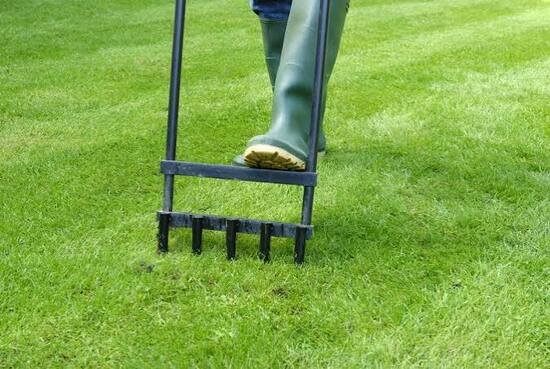
- A core aerator uses hollow tines to physically remove small cylinders of soil. This creates space within compacted ground and is generally the preferred approach when relieving significant soil compaction.
- Spike aerators simply push solid spikes into the ground.
- They may create temporary openings, but they do not remove soil. In heavily compacted conditions, pushing material sideways can provide much less effective compaction relief than extracting cores.
- For a lawn with genuine compaction problems, choose core aeration.
- The small plugs left across the grass may look untidy for a short period, but they can be left to dry and naturally break down back into the lawn.
- Should You Mow Before Aerating?
- Mowing beforehand can make the process easier, but avoid scalping the lawn.
- Cut the grass to an appropriate height for its species and remove excessive debris that could interfere with the aerator.
- Most importantly, mark anything hidden beneath the turf.
- Identify sprinkler heads, irrigation pipes, shallow cables, landscape lighting and other obstacles before operating a core aerator.
- The machine’s tines penetrate several centimetres into the soil and can damage poorly marked irrigation equipment.
- If you are renting a machine, ask the rental provider to explain its operation before you begin.
Should You Fertilise or Overseed After Aeration?
- Aeration creates an excellent opportunity for other lawn-maintenance tasks.
- If your lawn is thin and the season is appropriate for the grass species, you can overseed after aerating. Core holes increase soil exposure and can help during lawn renovation.
- Fertilisation can also be coordinated with aeration when nutrients are actually required.
- However, avoid blindly applying fertiliser simply because you have aerated.
- A soil test can identify nutrient deficiencies and pH problems, helping you choose an appropriate treatment instead of applying unnecessary products.
- Aeration can also help incorporate a light compost topdressing into the upper soil profile.
How Often Should You Aerate Your Lawn?
- There is no requirement to aerate every lawn every year.
- A lawn growing in heavy clay soil or experiencing frequent traffic may benefit from annual aeration during its correct growing season.
- Moderately compacted lawns may need treatment every couple of years.
- A healthy lawn growing in good, uncompacted soil may require aeration much less frequently.
- Use lawn condition as your guide rather than automatically booking aeration every 12 months.
- Overworking healthy turf is unnecessary.
A Practical Lawn Aeration Routine
- First, identify whether you have cool-season or warm-season grass.
- Next, choose a period when that grass is actively growing and the weather is not excessively hot, dry or wet.
- Check the soil moisture. If the ground is rock-hard, irrigate beforehand. If it is muddy, postpone the job.
- Mow appropriately and clearly mark sprinkler heads and other hidden obstacles.
- Use a core aerator, making enough passes over compacted sections to produce meaningful coverage. Allow the extracted plugs to remain on the surface; once dry, they gradually break apart.
- If overseeding is part of your plan, do it during the appropriate establishment period for your grass.
- Then return to sensible watering and mowing while the lawn recovers.
- The goal is not to leave the lawn covered in as many holes as possible. It is to relieve compaction at a time when healthy grass can quickly recover and take advantage of the improved soil conditions.
FAQs
1. What month is best to aerate a lawn?
It depends on the grass. Cool-season lawns are generally best aerated in late summer or early autumn, while warm-season lawns are usually aerated in late spring or early summer during active growth.
2. Should I water my lawn before aerating?
Yes, if the soil is dry. The ground should be moist but not saturated, allowing hollow aerator tines to penetrate properly and remove soil cores.
3. Is it better to aerate before or after overseeding?
Aerate before overseeding. The process exposes soil and creates openings that can support better seed-to-soil contact during lawn renovation.
4. Does every lawn need to be aerated once a year?
No. Annual aeration is most useful for lawns with significant compaction, heavy foot traffic or challenging soil. A healthy lawn growing in loose, well-drained soil may need aeration far less frequently.