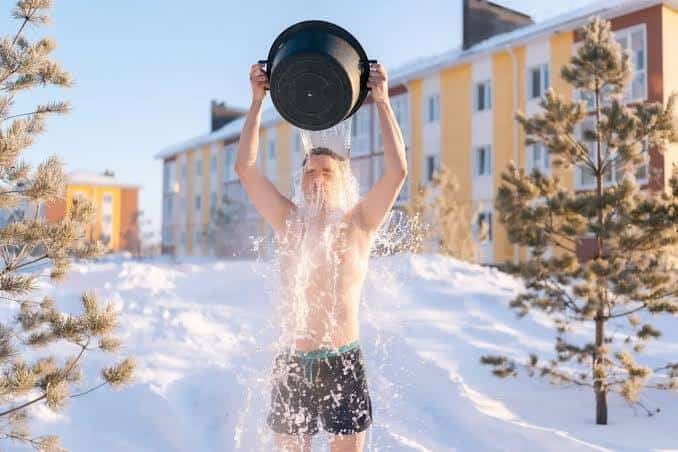
The alarm goes off on a hot Indian morning, you are still half asleep, and a cold shower sounds like the quickest way to feel fully awake. At night, however, the same shower may feel refreshing after a humid commute or workout. So is there actually a “best” time to take a cold shower?
For most healthy adults, there is no scientifically proven single best clock time for a daily cold shower. If you enjoy the energising sensation, morning is usually the most practical choice. After exercise, cool or cold water may also feel useful, particularly after strenuous activity or hot-weather training. Before bedtime, however, a very cold shower is not necessarily ideal if it makes you feel stimulated; a warm shower has stronger evidence for supporting sleep.
The bigger point is that cold showers are optional—not a health requirement. Recent reviews of cold-water exposure find some promising effects, but the evidence remains limited and does not establish an ideal daily timing, temperature or duration.
Best Time for a Cold Shower: Quick Overview
| Time/Situation | Practical Approach |
|---|---|
| Morning after waking | Good choice if cold water makes you feel alert |
| Before work or study | Useful as part of an energising routine |
| After normal exercise | Cool/cold shower is fine if comfortable |
| After intense endurance exercise | Cold exposure may help perceived recovery |
| Immediately after strength training | Avoid making intense cold exposure a routine if muscle growth is the priority |
| Hot Indian afternoon | Useful mainly for cooling and comfort |
| Early evening | Fine if it does not affect your sleep |
| Immediately before bed | Warm or lukewarm water may be more suitable |
| Beginner cold exposure | Start cool and gradually reduce temperature |
| Ideal duration | No scientifically established universal duration |
| Heart/circulatory conditions | Seek medical advice before deliberate intense cold exposure |
Is Morning the Best Time to Take a Cold Shower?
For everyday use, morning is probably the most convenient time, particularly if you enjoy how cold water makes you feel afterwards.
Sudden cold exposure produces an immediate physiological response. Cold-water research shows changes in breathing, heart rate, blood pressure and nervous-system activity. That intense sensation can explain why many people describe feeling awake or invigorated afterwards.
If you normally shower at 7 AM before leaving for the office, there is no need to create a separate cold-shower routine later in the day.
You could simply take your normal shower and finish with a short period of cooler water.
However, do not confuse feeling alert with evidence that morning cold showers permanently increase energy, testosterone, metabolism or immunity. Many popular claims surrounding cold exposure remain insufficiently established.
How Long Should a Morning Cold Shower Last?
There is no medically established rule requiring a two-, three- or five-minute cold shower.
Research on cold-water exposure uses widely different temperatures and durations, making it difficult to identify an optimal “dose.” A recent systematic review found cold-water protocols ranging considerably in both exposure time and method.
For beginners, there is no reason to turn the tap immediately to the coldest possible setting.
Take your normal shower, then gradually make the water cooler. Start with perhaps 15–30 seconds at a tolerable cool temperature and see how your body responds.
If comfortable, you can gradually extend the period.
You do not need to prove anything by standing under painfully cold water while shaking uncontrollably. Stop if you feel dizzy, faint, unusually breathless or unwell.
Are Cold Showers Better After Exercise?
Cold exposure is widely used in sports, although much of the research involves cold-water immersion rather than ordinary showers.
Evidence suggests cold-water immersion after exercise may reduce delayed muscle soreness compared with passive recovery. However, researchers have also noted uncertainty around the optimum protocol and safety.
That distinction matters.
A quick cool shower after your evening gym session is not equivalent to sitting waist-deep in 10°C water for 10–15 minutes.
After exercising outdoors during an Indian summer, a cool shower can simply be a pleasant way to lower discomfort, remove sweat and freshen up.
If your main goal is serious athletic recovery, the type, timing and intensity of cold exposure become more important than merely asking whether the shower should happen in the morning or evening.
What About Cold Showers After Strength Training?
If your primary training objective is building muscle and strength, be cautious about routinely using prolonged, intense cold-water immersion immediately after resistance training.
Research has raised concerns that repeated post-exercise cold-water immersion may blunt some of the adaptations involved in muscle growth.
Again, this evidence largely concerns substantial cold-water immersion rather than a short household shower.
You do not need to avoid washing yourself after the gym. A normal comfortable shower is fine.
The practical distinction is between taking a shower for hygiene and deliberately using strong cold exposure as a recovery intervention after every strength session.
Is a Cold Shower Good Before Bed?
It depends on how you personally respond, but very cold water would not be the first choice if your main objective is improving sleep.
Cold exposure initially creates a strong physiological response. If you come out feeling extremely alert, that is the opposite of what you want 15 minutes before trying to fall asleep.
Warm showers and baths have better evidence as part of a pre-sleep routine. Warm-water bathing roughly one to two hours before bedtime has been associated with improvements in sleep onset in research.
If you live somewhere with very hot nights and a cool shower makes you comfortable, there is nothing inherently wrong with taking one. Just avoid making it unnecessarily icy.
Think about the objective:
Morning: alertness may be welcome.
Bedtime: relaxation is usually the priority.
Do Daily Cold Showers Improve Immunity?
This claim needs perspective.
A large randomised trial previously found that people assigned to hot-to-cold showers had 29% less sickness absence from work, but they did not report fewer actual days of illness.
A more recent systematic review also found no significant immediate changes in measured immune function after cold-water immersion, while noting that the available evidence remains limited.
So it would be misleading to say that a cold shower every morning will “boost your immune system” enough to prevent infections.
Cold showers can be a personal wellness habit, but they should not replace sleep, physical activity, nutritious food, vaccination or appropriate healthcare.
Can Cold Showers Reduce Stress?
Research here is interesting but still developing.
A recent systematic review and meta-analysis found a reduction in stress 12 hours after cold-water immersion, but not immediately, one hour, 24 hours or 48 hours afterwards. Researchers also emphasised that relatively few high-quality trials exist and that protocols vary substantially.
Some people genuinely enjoy the mental challenge and refreshed feeling associated with cold water.
That is a perfectly valid reason to use it.
It simply should not be presented as a proven treatment for chronic stress, anxiety or depression.
Who Should Be Careful With Cold Showers?
Cold exposure causes rapid cardiovascular changes. Research has documented increases in blood pressure during acute cold-water exposure, while the initial cold-shock response can involve gasping, rapid breathing and changes in heart rate.
The risks are substantially greater with cold-water immersion than with an ordinary cool shower, but caution is still sensible.
People with cardiovascular disease, heart-rhythm disorders or other significant medical conditions should discuss deliberate intense cold exposure with a healthcare professional.
Older adults and anyone who frequently experiences dizziness should also avoid suddenly exposing themselves to extremely cold water without appropriate advice.
Never deliberately hold your breath during intense cold exposure, particularly in water.
A Practical Cold-Shower Routine for Beginners
If you want to experiment, morning is an easy place to start.
Take your normal shower at a comfortable temperature. Near the end, gradually turn the water cooler rather than switching instantly to ice-cold.
Stay relaxed and breathe normally.
Begin with approximately 15–30 seconds, then return to normal if necessary. Over subsequent days, you can increase the duration if you genuinely enjoy the experience.
There is no prize for making the water colder.
In winter—particularly in North Indian cities where tap water can become genuinely cold—you may need much less exposure than during summer.
The best daily cold-shower routine is therefore not the harshest one. It is one that remains comfortable, safe and easy enough that it does not turn an ordinary hygiene habit into an endurance contest.
FAQs
1. Is it better to take a cold shower in the morning or at night?
A. Morning is the more practical choice if cold water makes you feel alert. At night, warm or lukewarm showers may be preferable when relaxation and sleep are the main goals.
2. How long should a daily cold shower be?
A. There is no scientifically established ideal duration. Beginners can start with a short 15–30-second cool finish and gradually increase it according to comfort rather than forcing several minutes of extreme cold.
3. Is taking a cold shower every day healthy?
A. A brief cold shower can be tolerated by many healthy adults, but strong claims about immunity, fat loss and other long-term benefits are not firmly established. Current research on cold-water exposure remains limited.
4. Should I take a cold shower immediately after the gym?
A. A normal cool shower after exercise is fine for most people. Cold-water immersion may reduce muscle soreness, but regularly using intense cold exposure immediately after resistance training may not be ideal when maximising muscle growth is the main objective.