There is a tiny window between a beautifully soft-boiled egg and one that has quietly turned hard-boiled while you were making toast. Anyone who has cut open an egg expecting a golden, creamy centre only to find a firm yellow yolk knows how much difference a minute can make.
For most large eggs, 6–7 minutes in already-boiling water is a useful starting point for a soft yolk. Around 6 minutes gives a softer, more flowing centre, while 7 minutes produces a creamy, jammy yolk with a firmly set white. Egg size, starting temperature, altitude and your preferred texture can shift these times slightly.
There is also an important food-safety point: a soft or runny yolk is intentionally undercooked. Official food-safety guidance recommends cooking ordinary shell eggs until both the white and yolk are firm; if you specifically want soft yolks, pasteurized shell eggs are the safer choice, particularly for people at higher risk from foodborne illness.
Soft-Boiled Egg Timing: Quick Overview
| Boiling Time | Expected Yolk Texture |
|---|---|
| 4 minutes | Very runny yolk; white may remain soft |
| 5 minutes | Runny yolk with a more set white |
| 6 minutes | Soft, flowing golden yolk |
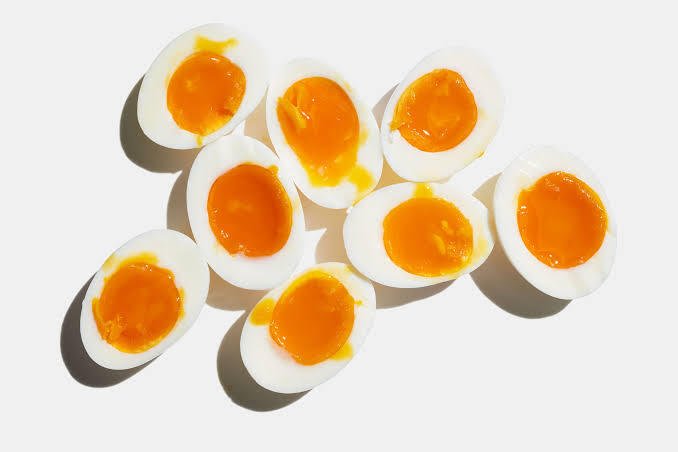
| 7 minutes | Creamy, jammy centre |
| 8 minutes | Mostly set but still slightly soft |
| 9 minutes | Firm yolk with some moisture |
| 10–12 minutes | Fully set, hard-boiled style |
| Best starting point for soft yolks | 6–7 minutes |
| After cooking | Transfer immediately to ice-cold water |
Times assume large eggs lowered carefully into water that is already boiling.
Is 6 Minutes Enough for a Soft-Boiled Egg?
For many people, six minutes is the sweet spot.
Start with a saucepan containing enough water to cover the eggs comfortably. Bring the water to a proper boil, then gently lower the eggs into it using a spoon.
Start your timer immediately.
After approximately six minutes, the white should be largely set while the centre remains warm, golden and runny.
This texture works particularly well with buttered toast, avocado toast, ramen, noodles or simply a little salt and pepper.
If the centre feels too liquid for you, add 30–60 seconds next time rather than jumping straight to eight or nine minutes.
What Does a 7-Minute Egg Look Like?
Seven minutes is ideal if you like a jammy rather than completely runny yolk.
The white should be firm, while the yolk remains soft and creamy in the centre. It will generally hold its shape when the egg is sliced rather than immediately flowing across the plate.
This makes a seven-minute egg useful for salads, sandwiches, rice bowls and noodle dishes.
For beginners, seven minutes can also be easier to handle because the egg is slightly firmer during peeling.
If you want something between runny and jammy, try 6 minutes 30 seconds. Egg cooking is one of those situations where 30 seconds can genuinely change the result.
Should You Start Eggs in Cold or Boiling Water?
Both methods exist, but starting in already-boiling water makes timing soft yolks easier to reproduce.
When eggs begin in cold water, cooking time depends partly on how quickly your particular stove and saucepan bring that water to a boil. A powerful gas burner may heat the pot much faster than a small induction plate.
Starting with boiling water removes much of this variation.
Bring the water to a boil first, reduce it slightly if necessary to prevent violent movement, then carefully lower the eggs using a slotted spoon.
Keep the water at a controlled boil or lively simmer and start the timer immediately.
Will Cold Eggs Crack in Boiling Water?
They can, particularly if they are dropped roughly into the saucepan.
Lower refrigerated eggs gently with a spoon rather than dropping them from above. Avoid overcrowding the saucepan because eggs knocking repeatedly against one another can also cause cracking.
Some home cooks allow refrigerated eggs to sit out briefly before boiling, but there is no need to leave them at room temperature for a long period.
In India’s warm climate, unnecessary countertop storage is best avoided.
If an egg has a visibly cracked shell before cooking, use another intact egg rather than selecting it for your soft-boiled breakfast.
Why You Should Use an Ice Bath?
Once your six- or seven-minute timer finishes, the egg is not magically protected from further cooking.
The shell and hot white retain considerable heat, so the yolk can continue firming even after the egg leaves the saucepan.
Transfer the eggs immediately into a bowl containing ice and cold water.
Leave them there for roughly 5 minutes if you plan to peel them. The rapid cooling stops much of the carryover cooking and helps preserve the yolk texture you worked to achieve.
If you want to eat the egg immediately from an egg cup, a shorter cold-water cooling period may be enough to make it comfortable to handle.
Does Egg Size Change Boiling Time?
Yes.
Most general cooking times assume a standard large chicken egg. A noticeably smaller egg will cook slightly faster, while an extra-large egg can need additional time.
For particularly large eggs, adding roughly 30–60 seconds can be a useful adjustment.
Starting temperature matters too. An egg straight from a cold refrigerator generally takes slightly longer for its centre to warm than an egg that begins closer to room temperature.
Rather than trying to calculate every variable, standardise your method.
Use the same size eggs, keep them refrigerated, start with boiling water and use the same saucepan. Once you find your perfect time—perhaps 6:30—you can reproduce it reliably.
Why Are My Soft-Boiled Eggs Difficult to Peel?
Very fresh eggs can sometimes be frustrating to peel because the inner membrane adheres more strongly to the egg white.
After cooking, cooling the eggs promptly in ice water can help with handling and peeling.
Gently crack the shell all around, then begin peeling near the wider end where an air pocket is often present.
Peeling under a little running water can also help separate stubborn pieces of shell from the egg.
If appearance matters—for example, you are preparing halved jammy eggs for a salad—handle them gently because a soft-boiled egg is naturally more delicate than a hard-boiled one.
Are Soft-Boiled Eggs Safe to Eat?
This deserves attention because cooking time and food safety are not the same thing.
Raw shell eggs can potentially contain Salmonella, including inside the egg. Food-safety authorities such as the FDA and USDA therefore recommend cooking ordinary eggs until both the yolk and white are firm. They specifically recommend pasteurized eggs or egg products when a recipe calls for raw or undercooked egg.
That means a deliberately runny six-minute yolk does not meet the conservative fully cooked recommendation.
If you prefer soft eggs, using pasteurized shell eggs reduces the risk. This is particularly important for pregnant women, young children, older adults and people with weakened immune systems, who can face greater consequences from foodborne infection.
A Simple Method for Perfect 7-Minute Eggs
Fill a saucepan with enough water to cover your eggs by a few centimetres and bring it to a boil.
Using a spoon, carefully lower refrigerated large eggs into the water. Set a timer for 7 minutes and maintain a controlled boil.
Meanwhile, prepare a bowl of ice and cold water.
As soon as the timer rings, remove the eggs and place them directly into the ice bath. Cool for about five minutes, then gently crack and peel.
If the centre is firmer than you prefer, try 6 minutes 30 seconds next time. If it is too runny, try 7 minutes 30 seconds.
Once you discover the timing that works with your eggs and stove, write it down. That half-minute adjustment is often the difference between an acceptable egg and exactly the yolk you wanted.
FAQs
Q1. Is 6 or 7 minutes better for soft-boiled eggs?
A. Choose 6 minutes for a more flowing yolk and approximately 7 minutes for a creamy, jammy centre. Exact results depend on egg size and starting temperature.
Q2. How do I get a runny yolk but fully set white?
A. Starting large eggs in already-boiling water and cooking for approximately 6–7 minutes generally produces this texture. Immediately transfer them to ice water to limit further cooking.
Q3. Can pregnant women eat soft-boiled eggs?
A. Because soft yolks are undercooked, they can present a Salmonella risk when ordinary unpasteurized shell eggs are used. Food-safety guidance recommends fully cooked eggs for higher-risk individuals; pasteurized eggs are the safer option when preparing dishes that would otherwise contain undercooked egg.
Q4. Why does my yolk become hard even after boiling for 7 minutes?
A. Carryover cooking may be the reason. Transfer the egg into ice-cold water immediately when the timer ends. Egg size, starting temperature and the intensity of the boil can also affect the final texture.