Your hardwood floor has just been installed or refinished, and it looks perfect—smooth, glossy and completely dry from a distance. Naturally, the first question is: Can I walk on it now? Walking too early, however, can leave footprints, scuff marks or permanent impressions in a finish that has dried on the surface but is still curing underneath.
For newly refinished hardwood floors, waiting at least 24 hours before light foot traffic is a safe general starting point for many common polyurethane finishes. Some modern water-based finishes allow careful walking sooner, while oil-based products generally need longer. Furniture commonly needs around 72 hours or more, and rugs may need to stay off for a week or until the finish is fully cured. Manufacturer instructions should always take priority because modern floor finishes have very different curing schedules.
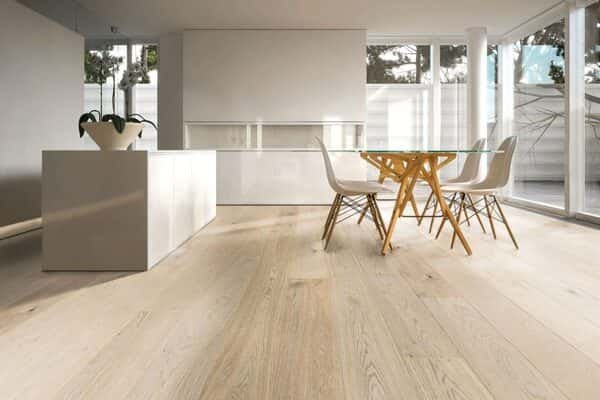
If you mean newly installed prefinished hardwood, rather than a floor that has just been coated on-site, the waiting time can be completely different.
Hardwood Floor Waiting Time: Quick Overview
| Situation | Typical Approach |
|---|---|
| Newly refinished floor | Often wait at least 24 hours |
| First light walking | Socks only where recommended |
| Oil-based polyurethane | Commonly 24 hours before light traffic |
| Water-based polyurethane | Some products allow earlier traffic |
| Heavy foot traffic | Usually wait longer than initial walk-on time |
| Furniture | Commonly 72 hours or as directed |
| Rugs and mats | Often 7 days or until full cure |
| Cleaning with water | Avoid until finish permits it |
| Pets | Keep off during early curing if possible |
| High humidity | Drying and curing may take longer |
| Newly installed prefinished floor | Follow installer instructions; finish curing may not be required |
| Best rule | Follow the exact finish manufacturer’s schedule |
Is 24 Hours Long Enough Before Walking on Hardwood Floors?
For many polyurethane-finished floors, 24 hours is a sensible minimum for light foot traffic.
For example, current Minwax floor-finish instructions allow light foot traffic after 24 hours for its Super Fast-Drying Polyurethane for Floors. Bona’s oil-modified Woodline Poly also permits walking after a minimum of 24 hours, while warning that the surface remains susceptible to scuffing during the curing period.
But “walking” at this stage means careful, limited traffic, not returning the room to normal use.
Avoid outdoor footwear, high heels, running children, heavy objects and anything that could scratch the developing finish.
Clean socks are usually the safest choice during the first permitted period.
Dry and Cured Are Not the Same Thing
This distinction explains most confusion around hardwood-floor waiting times.
A finish can become dry enough to touch or carefully walk on long before it reaches its final hardness.
Take an oil-modified polyurethane system as an example. Bona states that its Woodline Poly can be walked on after 24 hours but takes approximately 14 days to cure fully.
During that curing period, the finish remains more vulnerable to scratching, scuffing and marking than it will be later.
So when your contractor says you can walk on the floor tomorrow, that does not necessarily mean you can immediately replace the sofa, roll out a large rug and mop the room.
Think of floor recovery as stages rather than one deadline.
How Long After Water-Based Polyurethane Can You Walk?
Water-based polyurethane generally dries faster than traditional oil-based polyurethane.
Some water-based finishes can be recoated within only a few hours, which helps contractors complete multi-coat projects faster.
However, the exact walk-on time varies by product.
Do not assume that because a water-based coating feels dry after two hours, it is ready for normal traffic.
Check the manufacturer’s instructions for light traffic, furniture, rugs and full cure separately.
If the product permits early walking, use clean socks and minimise traffic during the first day or two.
One advantage of modern water-based systems is that they can significantly reduce downtime, making them attractive for occupied homes where keeping an entire room inaccessible for several days is difficult.
How Long After Oil-Based Polyurethane Can You Walk?
Oil-based polyurethane generally requires more patience.
For many products, 24 hours before light foot traffic is an appropriate minimum, although drying conditions can increase that period.
Bona’s oil-modified floor finish, for example, specifies approximately 8–12 hours of drying between coats under recommended temperature and humidity conditions, a minimum 24 hours before floor use, and around 14 days for the curing process.
Oil-based finishes also produce stronger solvent odours than many water-based alternatives, making good ventilation particularly important.
Never judge readiness purely by smell. A reduced smell does not automatically mean the coating is fully cured.
When Can You Put Furniture Back?
Furniture creates much more concentrated pressure than ordinary walking.
For several commonly used polyurethane floor products, around 72 hours is a typical minimum before furniture is returned.
Minwax specifies 72 hours for replacing furniture with several of its floor polyurethane products. Bona’s Woodline Poly similarly allows furniture after 72 hours, at which point it describes the finish as approximately 90% cured.
Even then, handle furniture carefully.
Lift chairs, beds and tables into position rather than dragging them across the floor.
Use clean, suitable protective pads underneath furniture legs. Avoid wheeling extremely heavy cabinets or appliances across a newly finished floor.
If your flooring professional recommends waiting longer, follow that advice.
How Long Before Putting Rugs on Hardwood Floors?
Rugs are often returned too early.
A large rug covers the surface and can affect the finish while it is still curing. Rug backing may also interact with a coating that has not achieved sufficient hardness.
Some floor-finish manufacturers recommend keeping rugs off for at least seven days, while certain oil-based systems may require waiting until the finish has fully cured.
Minwax, for example, instructs users not to install rugs for seven days with some of its polyurethane floor finishes.
Bona recommends keeping walk-off mats away until its oil-modified finish has completed its approximately 14-day cure.
Therefore, do not use the furniture deadline as the rug deadline. They may be different.
Do Humidity and Temperature Change the Waiting Time?
Yes.
Finish manufacturers specify drying times under particular environmental conditions. If your home is much cooler or more humid, the coating may dry more slowly.
Bona recommends approximately 18–27°C and 40–60% relative humidity for its Woodline Poly and notes that high humidity or low temperature extends drying time.
This is especially relevant in India during the monsoon.
A floor refinished in a humid Mumbai home may not behave exactly like the same product applied under controlled air-conditioned conditions.
Proper ventilation and suitable indoor conditions help the curing process, but avoid attempting to force-dry the finish with extreme heat.
What About Newly Installed Prefinished Hardwood?
Not every new hardwood floor has wet polyurethane sitting on top.
Prefinished hardwood boards are factory-finished before installation. Once correctly installed, there may be no on-site coating that needs several days to cure.
In this case, your installer may permit walking much sooner.
However, installation method matters.
A floating floor, nailed floor and glued-down engineered hardwood floor have different requirements. With glue-down installations, the flooring adhesive may need time to develop sufficient strength before heavy traffic or furniture is allowed.
Follow the adhesive manufacturer’s and flooring installer’s instructions rather than applying polyurethane drying times to every hardwood installation.
Keep Pets Off Newly Finished Floors
Pets introduce another challenge: claws.
Even when a finish is technically ready for light human traffic, energetic dogs can run, turn suddenly and scratch a surface that has not reached full hardness.
Where practical, keep pets away during the early curing period and follow your finish manufacturer’s traffic recommendations.
Make sure claws are trimmed before pets return.
Also avoid placing pet water bowls directly onto a recently finished surface until the coating has developed sufficient water resistance.
A Practical Return-to-Room Schedule
After the final coat is applied, treat the room as off-limits until the manufacturer’s initial walk-on period has passed.
For a product allowing traffic after 24 hours, return carefully in clean socks and keep movement minimal.
Around 72 hours, furniture may be returned if your particular finish permits it. Lift rather than slide everything.
Continue avoiding wet cleaning and rugs until the specified time has passed. Some products prohibit rugs or floor cleaning for seven days, while others require longer curing.
Most importantly, keep the product information from your flooring contractor. Knowing the exact finish name is far more useful than relying on a generic statement that “hardwood takes three days to dry.”
FAQs
1. Can I walk on newly refinished hardwood floors after 12 hours?
A. It depends on the finish, but 12 hours is too early for many conventional polyurethane systems. Unless your specific product permits earlier traffic, waiting at least 24 hours is the safer approach.
2. Should I wear socks when first walking on a refinished floor?
A. Yes. When the manufacturer first permits light traffic, clean socks are preferable to outdoor shoes. Avoid bare feet if the flooring professional advises against them, as oils or moisture from skin can affect some developing finishes.
3. How soon can I put my sofa back after refinishing hardwood?
A. Many floor finishes allow furniture after approximately 72 hours, but this varies. Lift furniture into place and use appropriate protective pads rather than dragging it across the new finish.
4. When can I mop newly refinished hardwood floors?
A. Do not wet-clean the floor until the finish manufacturer permits it. Some polyurethane systems require at least seven days, while longer-curing products may require additional time. During early curing, use only the cleaning method recommended for your particular finish.