You planned chicken curry for dinner, but at 6 PM the chicken is still frozen solid. Or perhaps you moved a large piece of mutton from the freezer to the fridge yesterday and are wondering whether it should be ready by now. Defrosting meat seems simple, but doing it incorrectly can turn an ordinary home-cooked meal into a food-safety risk.
For Indian households, where kitchen temperatures can become very warm, defrosting meat in the refrigerator is one of the safest methods. The meat remains cold while it gradually thaws, rather than sitting for hours at room temperature. As a practical guide, small portions and minced meat may need about 24 hours, while larger cuts can require 1–2 days or more. A large whole bird may take several days. Keep the refrigerator at 4°C or below and plan ahead rather than trying to speed up refrigerator thawing.
The exact time depends on the meat’s size, thickness, packaging and refrigerator temperature.
Meat Defrosting Time in Fridge: Quick Overview
| Type of Meat | Approximate Fridge Defrosting Time |
|---|---|
| Minced/ground meat, 500 g | Around 24 hours |
| Chicken breasts or small pieces | Around 24 hours |
| Pack of chicken thighs/drumsticks | About 24 hours |
| Small steaks or chops | Around 12–24 hours |
| Larger beef/lamb/mutton cut | 1–2 days or longer |
| Whole small chicken | About 1–2 days |
| Large roast | 2 days or longer |
| Whole turkey | About 24 hours per 1.8–2.3 kg |
| Very large frozen joint | Several days may be required |
These are planning estimates. Actual thawing time varies with thickness, packaging and refrigerator performance.
Why Is the Refrigerator the Safest Place to Defrost Meat?
Freezing does not necessarily destroy microorganisms that were present on raw meat. As food warms during thawing, bacteria can begin multiplying if conditions become favourable.
The refrigerator solves this problem by keeping the meat cold while the ice gradually melts.
For safe thawing, maintain the refrigerator at 4°C or below. If you are unsure about the actual temperature, an inexpensive refrigerator thermometer is useful.
Place frozen meat on the bottom shelf, ideally inside a tray or container. This catches any liquid that escapes from the packaging and prevents raw meat juices from dripping onto vegetables, cooked food or other ready-to-eat items.
Does Meat Really Take 24 Hours to Defrost?
For many small packages, yes.
A 500 g packet of minced meat, several chicken breasts or a couple of steaks will commonly thaw within approximately one day in a properly functioning refrigerator.
However, thickness matters more than simply looking at total weight.
A flat 1 kg package can thaw faster than the same amount of meat frozen into one thick block. Individual chicken pieces also thaw more quickly when they are separated rather than frozen together in a solid mass.
For beef, food-safety guidance indicates that ground beef, stew meat and steaks may thaw within a day, while bone-in pieces and whole roasts can require two days or longer.
If you need meat for Saturday evening, therefore, moving it to the refrigerator on Friday morning is much safer than waiting until Saturday afternoon.
How Long Does a Whole Chicken Take to Defrost?
A small whole chicken usually needs considerably more time than individual pieces.
Depending on its size, allow roughly one to two days in the refrigerator. A particularly large bird may take longer.
Keep it wrapped and place it in a sufficiently deep tray because liquid can escape as the bird thaws.
Do not assume the chicken is completely defrosted just because the outside feels soft. The cavity and thick areas near the joints can remain frozen after the surface has thawed.
Before cooking, check the inside carefully and remove any packaged giblets if supplied.
What About Large Roasts and Whole Turkeys?
Large pieces require advance planning.
A beef roast can take two days or longer to thaw in the refrigerator depending on size and thickness.
For whole turkey, a useful official guideline is approximately 24 hours for every 4–5 pounds (about 1.8–2.3 kg).
That means a large bird may need several days in the fridge before it is completely thawed.
This principle is useful for other large frozen meats too: the larger and thicker the item, the earlier you should move it from freezer to refrigerator.
How Long Can Defrosted Meat Stay in the Fridge?
This depends on the type of meat.
After refrigerator thawing, ground/minced meat, poultry and fish should generally be cooked or refrozen within 1–2 days.
Whole cuts of beef, pork, lamb or veal—such as steaks, chops and roasts—can generally remain refrigerated for another 3–5 days before cooking or refreezing.
This distinction is useful when meal plans suddenly change.
Suppose your chicken finishes thawing on Monday. You should aim to cook it within the next day or two rather than leaving it until the weekend.
A thawed beef steak generally gives you a somewhat longer refrigerated window.
Can You Defrost Meat on the Kitchen Counter?
No. Leaving frozen meat on the counter is not considered a safe thawing method.
The problem is that thawing happens from the outside inward.
A thick piece of frozen chicken might still contain ice in its centre while its outer surface has already warmed significantly. That warmer exterior can spend too much time at temperatures that allow bacteria to multiply.
This becomes particularly relevant in India, where room temperatures can easily exceed 30°C during summer.
Do not leave meat on the balcony, in direct sunlight or beside the stove to accelerate thawing either.
Hot-water thawing is also not recommended.
What If You Forgot to Defrost the Meat Overnight?
You still have safer options.
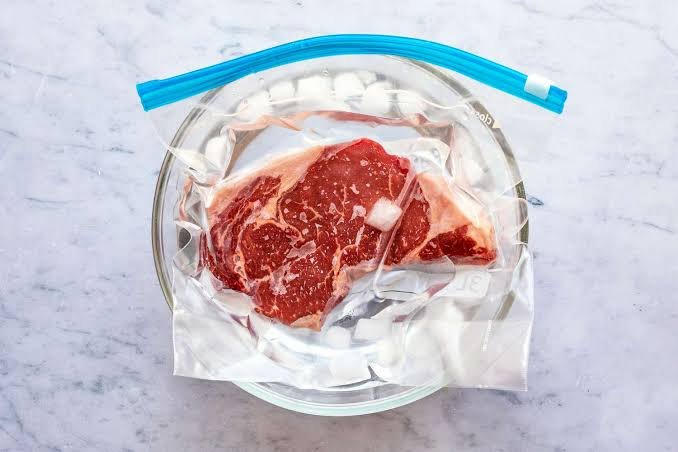
For faster thawing, place the meat in a leak-proof bag and submerge it in cold water. Change the water approximately every 30 minutes so it remains cold.
Small packages may thaw within an hour, while larger items can take several hours.
Once meat has been completely thawed using the cold-water method, cook it immediately.
Microwave defrosting is another option. Again, cook the meat immediately afterwards because parts of it can become warm or even begin cooking during the microwave process.
Do not use warm or hot water simply to save another 30 minutes.
Can You Refreeze Meat After Defrosting It in the Fridge?
Yes, provided the meat was thawed safely in the refrigerator and remained properly refrigerated.
It can generally be refrozen without cooking, although there may be some loss of quality because moisture is lost during thawing.
This is one advantage of refrigerator thawing.
Meat thawed using cold water or a microwave should be cooked before being refrozen.
So if you are uncertain whether you will actually cook the meat tomorrow, refrigerator thawing gives you more flexibility.
How to Defrost Meat Without Making a Mess
Keep the meat in its original sealed packaging if the package is intact. Put it inside a plate, bowl or tray large enough to catch leaks.
Store it on the lowest practical refrigerator shelf, away from ready-to-eat food.
Never wash raw chicken or other raw meat as part of the thawing process. Splashing water can spread microorganisms around the sink, countertop and nearby utensils.
After handling raw meat, wash your hands thoroughly and clean surfaces, knives, trays and chopping boards that have come into contact with it.
How Can You Tell Whether Meat Is Completely Defrosted?
Press the thickest area through the packaging. Properly thawed meat should feel flexible rather than rock-hard.
For poultry, inspect the cavity and areas around joints. For thick cuts, check the centre for ice crystals or hard frozen sections.
Do not rely only on the outside surface.
If your recipe specifically requires fully thawed meat and the centre remains frozen, return it to the refrigerator or use an approved faster thawing method.
A Simple Planning Rule for Indian Kitchens
If you are cooking small meat portions tomorrow, move them from freezer to refrigerator today.
For a whole chicken or large cut, start one to two days ahead. For a very large bird or roast, allow several days based on its weight.
Keep the refrigerator at 4°C or colder, contain raw juices and avoid the temptation to leave frozen meat on the kitchen counter overnight.
Planning one day earlier is much easier than trying to safely rescue a frozen chicken 30 minutes before dinner.
FAQs
1. Can I leave frozen chicken in the fridge for two days to defrost?
Yes. Depending on its size, a whole chicken may require around one to two days to thaw. Once poultry is fully thawed in the refrigerator, it should generally be cooked or refrozen within another one to two days.
2. Can meat take more than 24 hours to defrost in the fridge?
Absolutely. Large roasts, whole chickens and other thick cuts can require two days or longer. Whole turkeys may require roughly 24 hours for every 1.8–2.3 kg.
3. Is it safe to defrost meat overnight on the kitchen counter?
No. The outside of the meat can become warm enough for rapid bacterial growth while the centre remains frozen. Use the refrigerator, cold-water method or microwave instead.
4. Can I refreeze meat after thawing it?
If the meat was thawed safely in the refrigerator and remained properly refrigerated, it can generally be refrozen without cooking, although quality may decline. Meat thawed using cold water or a microwave should be cooked before it is refrozen.