You make a big batch of samosas or pakoras at home and are left with half a kadai of oil. Throwing it away immediately feels wasteful, especially when cooking oil is expensive. So you strain it, keep it aside and use it again the next weekend. But then comes the important question: how many times can deep-frying oil actually be reused before it should be discarded?
There is no single safe number for every oil because deterioration depends on the type of oil, frying temperature, food being fried, duration of heating and storage between uses. For home cooking, a cautious practical approach is to limit reuse to about 2–3 frying sessions, and discard it earlier if it becomes dark, thick, foamy, smells rancid or starts smoking at a lower-than-usual temperature. Indian food-safety guidance is particularly cautious about repeatedly heated oil because degradation products build up with continued frying.
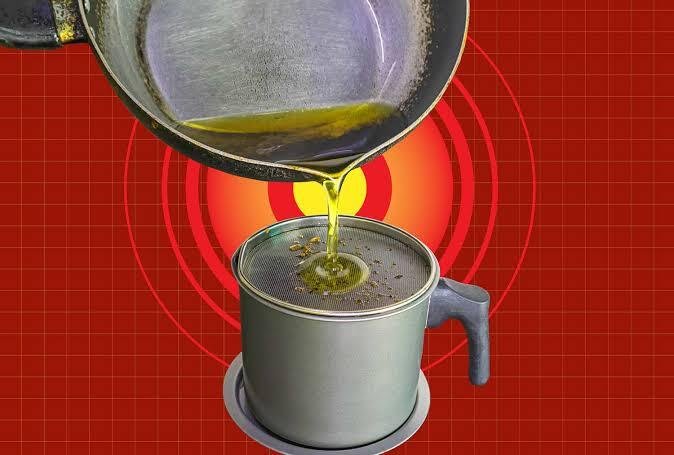
The condition of the oil matters more than simply counting how many times it has entered the kadai.
Deep Frying Oil Reuse: Quick Overview
| Situation | Practical Advice |
|---|---|
| Oil used once at controlled temperature | May be suitable for reuse |
| Oil used 2–3 times | Inspect carefully before further use |
| Oil repeatedly overheated | Discard |
| Oil starts smoking unusually early | Discard |
| Oil develops excessive foam | Discard |
| Oil smells rancid or unpleasant | Discard |
| Oil becomes unusually thick/sticky | Better to discard |
| Oil contains burnt food particles | Filter immediately; discard if badly degraded |
| Properly filtered reusable oil | Store in a sealed, preferably light-resistant container |
| Commercial frying oil | FSSAI’s TPC limit applies to food businesses |
How Many Times Can You Reuse Frying Oil?
For an Indian household, two to three uses is a sensible conservative limit rather than trying to stretch the same oil through numerous frying sessions.
However, even that is not a guarantee.
Oil used twice for relatively short frying at controlled temperatures may remain in better condition than oil used once for hours at excessively high heat. What you fry also makes a difference.
Foods covered in wet batter or breadcrumbs can leave substantial particles behind. These crumbs continue to cook and burn, accelerating deterioration. Moisture entering hot oil also contributes to degradation.
By contrast, relatively clean frying under controlled conditions may leave the oil in better shape.
This is why the rule should be: count the uses, but inspect the oil every time.
Why Does Repeatedly Heating Oil Become a Problem?
Deep frying exposes oil to high temperatures, typically around 170–190°C depending on the food and method.
During repeated heating, the oil undergoes chemical changes including oxidation, hydrolysis and polymerisation. Its properties gradually change, and degradation products accumulate.
In India, the Food Safety and Standards Authority of India (FSSAI) uses Total Polar Compounds (TPC) as an important measure of frying-oil degradation for food businesses. Oil containing more than 25% TPC must not be used by food business operators.
A normal household does not have equipment for measuring TPC, which is why visual, smell and cooking-performance changes become useful practical warning signs.
The important lesson is simple: repeatedly topping up and reheating the same old batch indefinitely is not a good kitchen habit.
6 Signs That Frying Oil Should Be Thrown Away
1. It Smells Rancid
Smell the oil before reheating it.
Fresh or properly stored used oil should not have a strongly unpleasant, stale or rancid smell. If the odour has clearly changed, do not try to rescue it by mixing it with fresh oil.
Discard it.
2. The Oil Has Become Very Dark
Some darkening naturally occurs after frying, particularly with heavily seasoned or battered Indian foods.
But oil that has become dramatically darker after repeated use may be significantly degraded.
Colour alone is not a perfect safety test, but combined with smell, foaming or thickening, it is a strong reason to stop reusing the oil.
3. It Starts Smoking Earlier Than Normal
Oil has a smoke point—the temperature at which it begins producing visible smoke as it breaks down.
Repeated frying can reduce that smoke point. If an oil that previously handled normal frying temperatures suddenly begins smoking much sooner, discard it.
Do not keep cooking with heavily smoking oil.
4. Excessive Foam Appears
Normal bubbling occurs when food enters hot oil because moisture is escaping from the food.
Persistent or unusual foaming across the oil’s surface is different and can indicate deterioration.
If old oil becomes excessively foamy during heating or frying, replace it.
5. The Oil Has Become Thick or Sticky
Repeatedly heated oil can become more viscous as degradation progresses.
If it pours noticeably differently from fresh oil or feels unusually sticky, do not keep extending its life.
6. Food Starts Tasting Strange
Old oil can affect flavour and smell.
If fresh ingredients develop an unpleasant, stale or bitter taste after frying, the oil may already have gone too far.
Do not continue using questionable oil simply because there is a large quantity remaining.
Does the Type of Food Affect How Long Oil Lasts?
Yes, significantly.
Consider frying plain papad compared with several batches of bread pakoras.
Pakora batter can release flour, spices and tiny food particles into the oil. These pieces settle at the bottom and continue burning each time the oil is reheated.
Similarly, breaded foods can leave crumbs behind.
Fish can transfer a strong flavour and aroma to frying oil, making it unsuitable for sweets or vegetarian snacks even if the oil has not yet deteriorated badly.
For this reason, some home cooks keep separately labelled reusable oil for particular types of food.
However, never reuse frying oil where allergen cross-contact could create a risk for someone eating the subsequently fried food.
How to Store Used Frying Oil Correctly?
Proper storage can slow deterioration.
Once you have finished frying, switch off the heat and allow the oil to cool safely. Do not handle extremely hot oil or pour it into a container that is not designed to withstand heat.
Once sufficiently cooled, strain it through a fine sieve or suitable filtering material to remove crumbs and burnt particles.
Transfer the filtered oil to a clean, dry, tightly sealed container. A light-resistant container is preferable because exposure to air and light contributes to oxidation.
For best quality, refrigeration is a useful option for oil intended for reuse. USDA guidance notes that properly strained used frying oil can be stored in a sealed, light-resistant container and recommends refrigeration for best quality.
Label the container with something simple such as:
Pakora Oil – Used Once – 20 August
This prevents the surprisingly common problem of forgetting whether the oil has been used once or five times.
How Long Can You Store Used Frying Oil?
Storage time and number of frying cycles are two different things.
USDA guidance indicates that properly filtered used frying oil can be stored in a sealed, light-resistant container for up to about three months, preferably refrigerated.
That does not mean oil can be repeatedly fried for three months regardless of its condition.
If deterioration appears after the second use, throw it away immediately. Likewise, oil that smells rancid after storage should be discarded even if you used it only once.
Think of three months as a potential storage limit under suitable conditions—not permission for unlimited reheating.
Should You Add Fresh Oil to Old Frying Oil?
Adding a little fresh oil to an old kadai may make the mixture look better, but it does not reverse degradation that has already occurred.
Fresh oil cannot remove the compounds created during previous heating.
If the existing oil is still in acceptable condition and you simply need a little more volume, topping up may be practical. But if the old oil is already dark, foamy, rancid or smoking excessively, do not try to save it with fresh oil.
Start again with a fresh batch.
Can Used Frying Oil Be Used for Normal Cooking?
Indian households sometimes reuse leftover frying oil for tadka, sabzi or paratha preparation.
The safer approach is not to make repeatedly heated frying oil a routine ingredient in everyday meals. If oil has already undergone several high-temperature frying cycles, using it in another dish does not undo the degradation.
If lightly used oil remains suitable for reuse, use it promptly and within a limited number of total heating cycles.
Once deterioration signs appear, remove it from the food chain entirely.
How Should You Dispose of Old Cooking Oil?
Never pour a large quantity of cooking oil into the kitchen sink or toilet.
Oil can cool and contribute to drain and sewer blockages.
Allow unwanted oil to cool completely and transfer it to a secure disposable container according to local waste-disposal practices.
Large food businesses in India have additional responsibilities. FSSAI’s RUCO (Repurpose Used Cooking Oil) initiative is designed to divert used cooking oil away from the food chain and towards uses such as biodiesel production.
For households, the key principle is straightforward: once frying oil is no longer suitable for eating, do not keep finding new food uses for it.
FAQs
Q1. Can I reuse deep-frying oil three times?
A. Potentially, yes. For home cooking, limiting oil to roughly two or three frying sessions is a cautious practical approach. However, discard it sooner if it becomes excessively dark, foamy, thick, rancid-smelling or begins smoking unusually early.
Q2. Can I keep used frying oil for one month?
A. Properly strained and stored oil may remain usable for considerably longer than a month under suitable conditions. USDA guidance allows properly stored frying oil for up to about three months, with refrigeration recommended for best quality. Always inspect it before reuse.
Q3. Can I mix old frying oil with fresh oil?
A. You can top up oil that is still in good condition, but fresh oil cannot restore degraded oil. If the old oil smells bad, foams excessively, has become very dark or smokes unusually early, discard it instead of diluting it with fresh oil.
Q4. Is it safe to reuse oil used for frying pakoras or samosas?
A. It may be reused a limited number of times if it has not overheated or deteriorated. Filter out batter, crumbs and spices after the oil cools, store it properly and check its smell, colour and behaviour before reheating. Because battered foods leave more debris behind, their frying oil can deteriorate relatively quickly.