India’s scientific history is filled with people who asked difficult questions and spent years searching for answers. From understanding why light behaves the way it does to developing India’s space programme, improving agricultural productivity and transforming mathematical research, Indian scientists have contributed to discoveries and institutions whose influence extends far beyond laboratories.
Some Indian scientists became internationally famous through major discoveries, while others are remembered for building the institutions that allowed future generations to conduct advanced research. Their work spans physics, mathematics, astronomy, medicine, agriculture, nuclear science and space technology.
For students, these stories are particularly valuable because scientific progress rarely happens through one sudden moment of brilliance. It usually involves curiosity, experimentation, failure, persistence and collaboration.
The following top 10 famous scientists in Indian history are selected for their scientific contributions, historical importance and lasting influence. This is not an official ranking, as comparing achievements across different periods and scientific fields would be unfair.
Top 10 Famous Scientists in Indian History: Quick Overview
| Scientist | Field | Famous For |
|---|---|---|
| C. V. Raman | Physics | Raman Effect |
| Satyendra Nath Bose | Physics | Bose-Einstein Statistics |
| Srinivasa Ramanujan | Mathematics | Number Theory and Mathematical Research |
| Jagadish Chandra Bose | Physics & Plant Science | Radio/Microwave Research and Plant Studies |
| Homi J. Bhabha | Nuclear Physics | India’s Nuclear Programme |
| Vikram Sarabhai | Space Science | Indian Space Programme |
| A. P. J. Abdul Kalam | Aerospace | Missile and Space Technology |
| Meghnad Saha | Astrophysics | Saha Ionization Equation |
| M. S. Swaminathan | Agricultural Science | India’s Green Revolution |
| Har Gobind Khorana | Biochemistry & Genetics | Genetic Code Research |
1. C. V. Raman
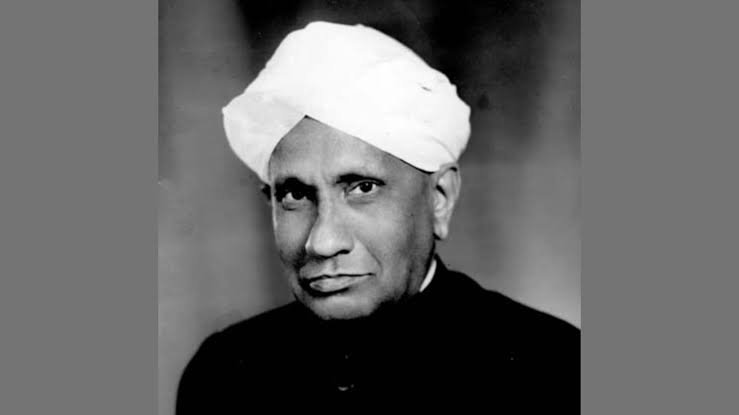
Sir Chandrasekhara Venkata Raman, better known as C. V. Raman, is one of the most celebrated physicists in Indian history.
His greatest contribution came through research into the scattering of light. The phenomenon he discovered became known as the Raman Effect.
This discovery demonstrated that when light interacts with matter, a small portion of the scattered light can undergo a change in wavelength related to molecular properties.
The work eventually became important to Raman spectroscopy, a technique used in scientific analysis.
C. V. Raman received the Nobel Prize in Physics in 1930 for his work on light scattering.
His legacy is associated with:
- Experimental physics
- Optics
- Raman Effect
- Scientific research in India
- Raman spectroscopy
India celebrates National Science Day on 28 February, commemorating the announcement of the Raman Effect.
2. Satyendra Nath Bose
Satyendra Nath Bose made a contribution to theoretical physics so significant that an entire class of particles—bosons—carries a name derived from his.
Bose developed important work concerning the statistical behaviour of particles such as photons.
His research reached Albert Einstein, who recognised its importance and extended the ideas further. This contributed to what became known as Bose-Einstein statistics.
Bose’s work became fundamental to modern quantum physics.
His major scientific legacy includes:
- Quantum mechanics
- Statistical mechanics
- Bose-Einstein statistics
- The theoretical foundation associated with bosons
Bose’s story is particularly interesting for students because some scientific contributions become even more influential as later discoveries reveal their wider implications.
3. Srinivasa Ramanujan
Srinivasa Ramanujan was not a laboratory scientist in the conventional sense, but his extraordinary mathematical contributions make him essential to any discussion of India’s scientific and intellectual history.
Born in Tamil Nadu, Ramanujan developed advanced mathematical ideas despite having limited access to formal mathematical training during his early life.
His work included major contributions related to:
- Number theory
- Infinite series
- Continued fractions
- Mathematical analysis
- Partitions
His mathematical ability eventually brought him into contact with British mathematician G. H. Hardy at the University of Cambridge.
Despite his short life, Ramanujan left behind an enormous body of mathematical work that researchers continued to study long after his death.
His birthday, 22 December, is observed in India as National Mathematics Day.
4. Jagadish Chandra Bose
Jagadish Chandra Bose was a remarkably interdisciplinary scientist whose work crossed the boundaries of physics and biology.
He conducted pioneering experiments involving electromagnetic and microwave phenomena and also developed instruments for scientific research.
Later, he became widely known for experiments examining responses in plants.
His areas of contribution included:
- Radio and microwave research
- Experimental physics
- Scientific instrumentation
- Plant physiology
Bose was also notable for conducting significant scientific research during the colonial period, when Indian researchers often faced institutional limitations.
His career demonstrates how scientific curiosity does not always remain confined to a single academic discipline.
5. Homi J. Bhabha
Dr. Homi Jehangir Bhabha played a foundational role in developing modern scientific research and nuclear science in independent India.
A nuclear physicist by training, Bhabha understood that India needed strong research institutions if it wanted to develop advanced scientific capabilities.
He was closely involved in the creation and development of institutions such as the Tata Institute of Fundamental Research.
He also played a central role in India’s atomic energy programme.
Bhabha’s legacy includes:
- Nuclear physics
- Atomic energy
- Institution building
- Fundamental scientific research
- Development of India’s scientific infrastructure
His importance therefore goes beyond his individual research.
By helping create institutions, he contributed to an environment in which generations of Indian scientists could conduct advanced research.
6. Vikram Sarabhai
If India’s space programme has a founding visionary, Dr. Vikram Sarabhai is one of the most important names associated with it.
Sarabhai strongly believed that space technology could help a developing country address practical challenges.
Rather than viewing space research purely as a symbol of technological prestige, he supported its potential applications in areas such as communication, education and development.
He played a foundational role in the institutions and initiatives that eventually shaped India’s modern space programme.
Sarabhai is particularly remembered for:
- Space research
- Institution building
- Satellite applications
- Scientific education
- Development of India’s space capabilities
His vision helped establish foundations that eventually enabled India to develop satellites, launch vehicles and major planetary missions.
7. Dr. A. P. J. Abdul Kalam
Dr. Avul Pakir Jainulabdeen Abdul Kalam became one of India’s most popular scientific personalities.
Before serving as the 11th President of India, Kalam spent much of his professional career working in India’s defence and space programmes.
An aerospace scientist, he was involved in important technological projects and became popularly known as the “Missile Man of India.”
His career was connected with:
- Aerospace engineering
- Missile technology
- Launch vehicle development
- Defence research
- Science education
Kalam’s public influence extended beyond his technical work.
He became particularly famous for interacting with students and encouraging young Indians to develop scientific curiosity, ambition and a sense of national responsibility.
His ability to communicate complex ambitions in simple language helped turn him into an inspirational figure for generations of students.
8. Meghnad Saha
Meghnad Saha was an Indian astrophysicist whose work helped scientists better understand the physical conditions inside stars.
He developed the Saha ionization equation, which connects the ionization state of elements with factors such as temperature and pressure.
This became highly important in astrophysics because the spectra of stars contain information about their physical conditions.
Saha’s contribution helped scientists interpret stellar spectra more effectively.
His work is mainly associated with:
- Astrophysics
- Thermal ionization
- Stellar spectra
- The Saha ionization equation
His career is an excellent example of how theoretical scientific work can provide tools for understanding objects located unimaginably far from Earth.
9. M. S. Swaminathan
Not every major scientific achievement happens in physics laboratories or space research centres.
Dr. M. S. Swaminathan demonstrated how agricultural science can directly affect millions of people’s everyday lives.
He played an important role in India’s Green Revolution, particularly in the development and adoption of agricultural approaches that helped increase food-grain production.
His work was closely connected with:
- Agricultural research
- Crop improvement
- Food security
- High-yielding crop varieties
- Sustainable agriculture
During the decades following Independence, food security was one of India’s most serious national challenges.
Advances in agricultural science, combined with irrigation, fertilisers, policy measures and farmer adoption, helped significantly change food production.
Swaminathan later also emphasised the importance of sustainability and farmer welfare.
10. Har Gobind Khorana
Har Gobind Khorana was born in British India and later built an international scientific career that made major contributions to molecular biology and genetics.
His research helped scientists understand how genetic information is translated into proteins.
Along with Robert W. Holley and Marshall W. Nirenberg, Khorana received the 1968 Nobel Prize in Physiology or Medicine for work related to the genetic code and its role in protein synthesis.
His scientific contribution is associated with:
- Genetics
- Biochemistry
- Molecular biology
- Genetic code
- Protein synthesis
Khorana’s work contributed to the foundations of modern molecular biology.
His career also demonstrates the international nature of science, where researchers often study, collaborate and conduct research across multiple countries.
How These Scientists Changed India
Although these scientists worked in completely different fields, their contributions collectively shaped modern India.
Their influence can be seen in:
- Space technology
- Nuclear research
- Agriculture
- Physics
- Mathematics
- Genetics
- Astronomy
- Scientific education
- Research institutions
Some made discoveries, while others built institutions.
Both contributions matter.
A breakthrough can expand human knowledge, but strong universities, laboratories and research organisations allow scientific progress to continue across generations.
What Students Can Learn From Famous Indian Scientists
The most useful lesson from these scientists is not simply memorising names and discoveries.
Their careers demonstrate several qualities that remain important for students:
- Curiosity: Important discoveries often begin with questions.
- Persistence: Scientific research frequently involves unsuccessful attempts.
- Independent thinking: New ideas sometimes challenge established assumptions.
- Strong fundamentals: Major research depends on deep understanding of basic concepts.
- Collaboration: Modern science often involves teams and international cooperation.
- Institution building: Creating opportunities for future researchers can be as important as individual achievement.
India’s scientific future will depend on new generations taking these qualities into emerging fields such as artificial intelligence, biotechnology, renewable energy, quantum technologies, space exploration and advanced materials.
FAQs
Q1. Who is the most famous scientist in Indian history?
A. C. V. Raman is among India’s most internationally recognised scientists because of the Raman Effect and his 1930 Nobel Prize in Physics. However, India has produced major scientists across many fields, so there is no official single “greatest” scientist.
Q2. Which Indian scientist is known as the father of the Indian space programme?
A. Dr. Vikram Sarabhai is widely regarded as the father of the Indian space programme because of his foundational role in developing India’s space research vision and institutions.
Q3. Why is Satyendra Nath Bose important in modern physics?
A. Bose developed important statistical work on quantum particles that contributed to Bose-Einstein statistics. The term “boson,” used for a major class of fundamental particles, was named in recognition of Bose.
Q4. Which Indian scientists have received Nobel Prizes for scientific work?
A. C. V. Raman received the 1930 Nobel Prize in Physics. Har Gobind Khorana, who was born in British India and later became a U.S. citizen, shared the 1968 Nobel Prize in Physiology or Medicine for research connected with the genetic code and protein synthesis.