It is peak summer, your AC is running for hours every day, but the room suddenly takes longer to cool. You lower the temperature, increase the fan speed and start wondering whether the air conditioner needs servicing. Sometimes, the problem is much simpler: the AC filter is dirty.
For Indian homes, this matters even more because air conditioners often deal with dust, construction particles, traffic pollution, pet hair and months of heavy summer use. A clogged filter restricts airflow, makes the AC work harder and can contribute to poor cooling and higher electricity consumption. For replaceable HVAC filters, checking the filter every month and replacing it roughly every 1–3 months is a sensible general rule. Reusable filters in many split and window ACs are normally cleaned rather than routinely thrown away, so the manufacturer’s instructions should always come first.
The correct schedule depends on your AC type, usage, indoor conditions and filter design.
AC Filter Replacement and Cleaning: Quick Overview
| Situation | Practical Schedule |
|---|---|
| Standard replaceable HVAC filter | About every 1–3 months |
| AC running heavily every day | Inspect monthly; replace sooner if dirty |
| Home with pets | Check monthly; replacement may be needed more frequently |
| Dusty or high-pollution location | Inspect every 2–4 weeks |
| Holiday home/rarely used room | May last longer, subject to manufacturer guidance |
| Reusable split/window AC mesh filter | Clean regularly instead of replacing each time |
| Filter visibly clogged or damaged | Replace or clean immediately |
| After renovation/construction work | Inspect immediately and replace/clean if heavily dusty |
Is Every Three Months the Right Rule?
- Three months is a useful maximum general guideline for many replaceable residential HVAC filters, but it should not become an automatic rule for every household.
- ENERGY STAR advises checking HVAC filters every month, especially during periods of heavy heating or cooling use. If the filter looks dirty after one month, it should be changed; otherwise, replacement should occur at least about every three months for the systems covered by that guidance.
- The U.S. EPA similarly notes that manufacturers commonly recommend replacement approximately every 60–90 days, although actual frequency depends on how quickly the filter becomes dirty.
- For Indian households where an AC may run 10–15 hours a day during May and June, inspection is more useful than simply waiting for a calendar reminder.
Why Does a Dirty AC Filter Matter?
- The filter catches dust and other particles before they accumulate deeper inside the system or circulate through the relevant HVAC setup.
- As the filter becomes loaded, air has greater difficulty passing through it. Reduced airflow can make the cooling system work harder to maintain the temperature you have selected.
- That can mean slower cooling, unnecessary energy consumption and additional strain on the equipment. Dirt can also accumulate elsewhere in the system when maintenance is neglected.
- A filter change is therefore not just an indoor-cleanliness task. It is part of maintaining the AC’s performance.
6 Signs Your AC Filter Needs Attention
1. The Filter Looks Grey and Heavily Dusty
- This is the simplest test.
- Inspect the filter rather than relying entirely on its age. If the original surface is covered with a thick layer of dust and debris, clean or replace it according to its type.
2. Cooling Has Become Slower
- A dirty filter can restrict airflow. You may notice that the AC runs for longer but the room does not become comfortable as quickly as before.
- However, poor cooling can also be caused by dirty coils, low refrigerant, compressor problems or other faults. If filter maintenance does not improve performance, arrange professional servicing.
3. Airflow Feels Weak
- Place your hand near the AC outlet without opening or interfering with the equipment. If airflow has noticeably weakened compared with normal operation, a clogged filter is one possible reason.
- Inspecting the filter is an easy first troubleshooting step.
4. Electricity Consumption Has Increased
- A sudden electricity-bill increase does not prove that the filter is responsible—weather, thermostat settings and running hours matter enormously.
- Still, dirty filters can force HVAC equipment to work harder. Regular filter maintenance is therefore one of the simple efficiency habits worth maintaining.
5. Dust Builds Up Quickly Around the Room
- If surfaces seem unusually dusty despite regular cleaning, inspect your AC and its filters.
- Remember that an AC filter is not a complete air purifier. Standard filters vary considerably in their ability to capture fine airborne particles.
6. The Filter Is Damaged
- A torn, bent or deteriorated disposable filter should be replaced even if it has not reached its normal replacement date.
- A damaged filter may not fit correctly, allowing air to bypass the filtration material.
Split AC Filters: Replace or Clean?
- This is where many Indian households need to distinguish between replacement and cleaning.
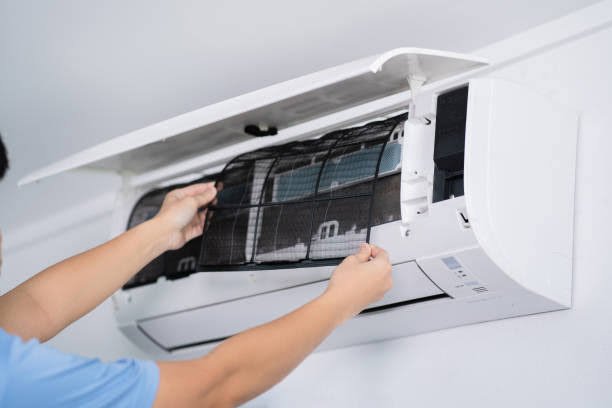
- Most wall-mounted split AC indoor units have removable mesh or pre-filters. These are commonly washable and reusable. Instead of replacing them every month, homeowners generally remove and clean them periodically according to the manufacturer’s instructions.
- During heavy summer use, inspecting these filters every couple of weeks can be practical, particularly in dusty locations.
- Turn the unit off before opening the indoor unit. Remove the filters according to the manual, clear loose dust and wash them only if the manufacturer says they are washable. Allow them to dry completely before reinstalling.
- Do not reinstall a dripping-wet filter.
- Replacement becomes necessary if the reusable filter is torn, permanently damaged, badly deformed or if the manufacturer specifies a replacement interval.
What About Window AC Filters?
- Window ACs also commonly use reusable filters intended mainly to protect the air conditioner from dust and debris.
- The EPA notes that window and wall-mounted ductless units generally have limited filtration designed primarily to keep the inside of the air conditioner clean rather than provide high-level fine-particle air cleaning.
- These filters should therefore be inspected and cleaned regularly during periods of frequent operation.
- Because designs vary widely between brands, check your AC manual before using detergent, brushes or other cleaning methods.
When Should You Replace Filters More Frequently?
- Some homes put much greater pressure on filters.
- If you have dogs or cats, fur and dander can contribute to faster loading. Homes near busy roads, construction sites or dusty open areas may also need more frequent inspection.
- Renovation is another important situation. Drilling, sanding, painting preparation and construction work can release large amounts of dust. Inspect the AC filter during and immediately after such work.
- Heavy usage matters too. An AC running every night throughout an Indian summer naturally moves far more air through its filter than an AC used only on occasional weekends.
- If someone smokes indoors, filtration and indoor-air-quality requirements may also be different, although eliminating indoor smoking is far more effective than expecting an AC filter to solve the problem.
Does a Higher-Rated Filter Need Less Frequent Replacement?
- Not necessarily.
- Higher filtration efficiency does not mean that a filter can simply be ignored for longer. As a filter captures particles, it still becomes loaded and requires replacement.
- For central HVAC systems, the EPA recommends considering a filter rated MERV 13 or as high as the system can accommodate when improved particle filtration is desired. But you should not simply install the highest-rated filter you can buy.
- The HVAC fan and filter housing need to be compatible with it. An unsuitable filter can interfere with airflow, so consult the equipment manufacturer or a qualified HVAC professional before upgrading filter efficiency.
- For ordinary Indian split ACs, do not try to insert an aftermarket HVAC filter into the indoor unit unless the manufacturer specifically supports it.
How to Make AC Filters Last and Work Better
- Keep doors and windows closed while the AC is operating so unnecessary outdoor dust does not continually enter the cooled room. Regularly vacuum and wet-clean floors, especially in homes with pets.
- Inspect filters before the main summer season instead of waiting until cooling performance falls.
- It is also sensible to have the complete air-conditioning system professionally maintained periodically. Filter cleaning cannot correct dirty evaporator or condenser coils, drainage problems, electrical faults or refrigerant issues.
- Most importantly, follow the specific AC manufacturer’s manual. A washable mesh filter, disposable central HVAC filter and specialised air-purifying filter can all have different maintenance requirements.
FAQs
1. Should I replace my AC filter every month?
Not necessarily. Many disposable HVAC filters can last roughly 1–3 months, but they should be checked monthly. If the filter becomes visibly dirty sooner because of heavy AC use, pets or dusty conditions, replace it earlier.
2. How often should I clean the filter of a split AC in India?
During frequent summer use, inspecting the reusable mesh filter every two to four weeks is a practical habit. Clean it whenever visible dust accumulates, while following the manufacturer’s recommended cleaning schedule and method.
3. Can a dirty AC filter increase my electricity bill?
It can contribute. A clogged filter restricts airflow and may make the cooling system work harder or operate longer. However, high electricity consumption can also result from extreme weather, low thermostat settings, poor insulation or mechanical problems.
4. Can I wash and reuse a disposable AC filter?
Do not wash a disposable filter unless its manufacturer specifically says it is washable. Disposable HVAC filters should normally be replaced. Reusable mesh filters found in many split and window ACs can generally be cleaned, dried and reinstalled according to the appliance instructions.