When furnishing an Indian home, one of the most common dilemmas is choosing between solid wood and plywood furniture. Both materials are widely used, but they differ significantly in composition, performance, cost, and longevity. With India’s diverse climates — high humidity in coastal regions, dry heat in the north, and heavy monsoons — understanding these differences helps you make an informed decision that balances durability, budget, aesthetics, and practicality for multi-generational living.
This article breaks down the key distinctions between solid wood and plywood furniture, their pros and cons, and practical guidance for Indian households.
Composition and Manufacturing
Solid Wood Furniture
Solid wood is made from natural timber cut directly from tree trunks. It is 100% real wood — no layers or synthetic additives in the core structure. Popular varieties in India include Teak (Sagwan), Sheesham (Rosewood), Mango, Acacia, and Sal. The wood is seasoned (dried) and crafted into furniture using traditional joinery or modern techniques.
Plywood Furniture
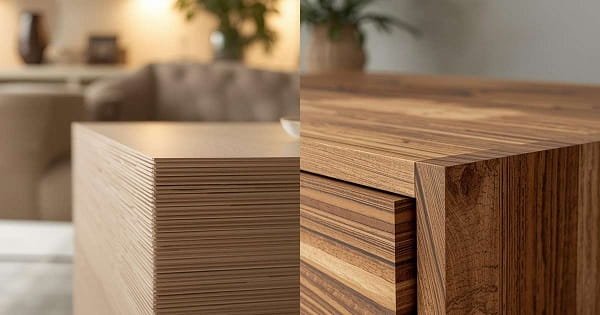
Plywood is an engineered wood product made by gluing together multiple thin layers (plies) of wood veneer. These layers are arranged with grains running in alternating directions for added strength and stability. The core is often made from softwood or plantation timber, while the outer surfaces may feature veneers of premium woods or laminates. BWP (Boiling Water Proof) or MR (Moisture Resistant) grades are common for Indian markets.
Durability and Strength
Solid wood generally offers superior long-term durability. It is denser and can withstand heavy daily use, making it ideal for beds, dining tables, and almirahs that serve joint families. It resists scratches better and can be repaired or refinished multiple times over decades.
Plywood, while strong due to its cross-layered construction, is more prone to delamination (layers separating) if exposed to excessive moisture. High-quality BWP plywood performs well but may not match the heirloom longevity of solid wood. It is less susceptible to cracking or warping compared to low-quality solid wood that hasn’t been properly seasoned.
In Indian conditions, solid woods like Teak excel in humid areas because of natural oils that resist termites and moisture. Plywood requires good edge sealing and quality laminates to perform similarly.
Weight and Appearance
Solid wood furniture feels substantial and premium. Its natural grain patterns, color variations, and texture give each piece a unique character. Over time, it develops a beautiful patina, especially Teak and Sheesham.
Plywood furniture is lighter, making it easier to move and assemble — a big advantage in urban apartments with narrow staircases. Modern plywood pieces with high-quality veneers can closely mimic solid wood looks, but they often lack the depth and authenticity upon close inspection. Laminate finishes provide uniform color but can appear artificial.
Cost Factor
This is where plywood shines for most middle-class Indian families. Solid wood furniture is significantly more expensive due to raw material costs, craftsmanship, and processing. A solid Sheesham double bed might cost ₹40,000–80,000+, while a comparable plywood version could be ₹15,000–35,000.
Plywood offers better value for budget-conscious buyers or those furnishing rental homes. It allows investing in larger or more pieces within the same budget.
Maintenance and Climate Suitability
Solid Wood: Requires periodic polishing with oils or wax to maintain its protective layer. It handles minor repairs well but can warp or crack if not properly treated in extreme humidity or dryness. Termite-prone areas need regular anti-termite treatment.
Plywood: Easier to maintain with laminate surfaces that resist stains and spills. However, damaged edges or water exposure can cause swelling. It is generally more stable in varying temperatures because of its layered construction.
For monsoon-prone regions, BWP plywood with proper finishes is often more forgiving than untreated solid wood. In dry areas, well-seasoned solid wood performs excellently.
Environmental and Health Aspects
Solid wood is more sustainable when sourced from responsibly managed forests or plantations. It is biodegradable and has a lower carbon footprint over its long life.
Plywood uses thinner veneers and can incorporate recycled or plantation wood, making it resource-efficient. However, some low-grade plywood uses urea-formaldehyde adhesives that may release VOCs (volatile organic compounds). Always choose E1 or E0 grade plywood for bedrooms and children’s rooms to minimize indoor air pollution.
Best Uses in Indian Homes
- Solid Wood is ideal for high-value, long-term investments: master beds, traditional almirahs, dining sets, and pooja mandirs. It suits ancestral homes or families who prefer timeless, repairable pieces.
- Plywood excels in modular wardrobes, TV units, kitchen cabinets, office desks, and children’s furniture. It is perfect for small apartments needing lightweight, customizable, and affordable solutions.
Many smart buyers use a hybrid approach — solid wood frames with plywood panels — to combine strength and cost-effectiveness.
Pros and Cons Summary
Solid Wood Pros:
- Exceptional durability and longevity (50+ years possible)
- Timeless natural beauty and unique character
- Easy to refinish and repair
- Better resale value
- Superior strength for heavy use
Solid Wood Cons:
- Higher cost
- Heavier and harder to transport
- Susceptible to warping if not seasoned well
- Requires more maintenance
Plywood Pros:
- Affordable and widely available
- Lightweight and stable
- Consistent quality and easier customization
- Good moisture resistance in BWP grades
- Faster manufacturing and delivery
Plywood Cons:
- Shorter lifespan compared to solid wood
- Can delaminate with water damage
- Less premium feel
- Difficult to repair major damage
- Potential off-gassing in lower grades
Making the Right Choice
Assess your needs: budget, space, climate, and how long you plan to stay in the home. For investment pieces meant to last generations, invest in solid wood. For quick, functional, and stylish setups, plywood or hybrid options work best. Always buy from reputed brands like Wooden Street, Pepperfry, or trusted local carpenters. Check for certifications, warranties (3–10 years preferred), and inspect joinery, finishes, and material thickness in person.
Measure your space carefully, consider Vastu preferences, and factor in maintenance routines. With rising awareness of sustainability, many manufacturers now offer certified, eco-friendly options in both categories.
Conclusion
The difference between solid wood and plywood furniture ultimately comes down to priorities. Solid wood represents tradition, strength, and lasting value — perfect for those who view furniture as family assets. Plywood offers practicality, affordability, and modern convenience — ideal for urban lifestyles and budget constraints. Understanding these differences empowers you to create a home that is both functional and beautiful while suiting India’s unique living conditions. Whether you choose one or combine both, quality craftsmanship and proper care will ensure your furniture serves you well for years.
FAQ’s
Q1: Which is better, solid wood or plywood for Indian homes?
It depends on your needs. Solid wood is better for durability and premium feel in high-use items, while plywood is more practical and affordable for modular and space-saving furniture.
Q2: Is plywood furniture durable in humid climates?
High-quality BWP plywood is quite durable if edges are properly sealed and protected from direct water exposure. It often performs better than poorly seasoned solid wood in monsoons.
Q3: Does solid wood furniture last longer than plywood?
Yes, properly maintained solid wood can last 30–50+ years, while good plywood furniture typically lasts 10–20 years depending on usage and care.
Q4: Can plywood furniture be repaired like solid wood?
Plywood is harder to repair extensively. Minor scratches or dents can be fixed, but structural damage or delamination often requires replacement of panels.
Q5: Which is heavier — solid wood or plywood?
Solid wood is significantly heavier, making plywood easier to handle and ideal for frequent shifting or rented apartments.
Q6: Is solid wood more expensive than plywood?
Yes, solid wood furniture usually costs 1.5 to 3 times more than comparable plywood pieces due to material and craftsmanship expenses.
Q7: How can I identify genuine solid wood furniture?
Check for natural grain variations on all sides (including insides and edges), substantial weight, and ask for wood type certification. Solid wood feels warmer to touch and has unique patterns unlike uniform plywood veneers.