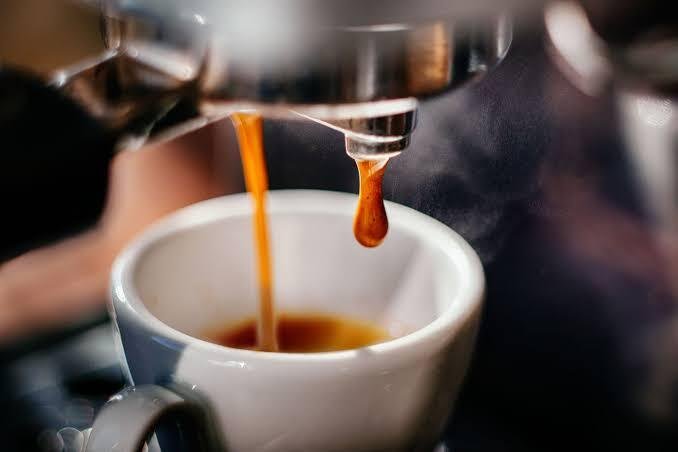
You weigh the coffee, tamp it carefully, lock the portafilter into the machine and press the button. Ten seconds later, the cup is almost full. On the next attempt, the espresso barely drips for 40 seconds. Both are technically espresso—but chances are they will taste completely different.
For home coffee lovers in India, learning how long an espresso shot should take to pull is one of the easiest ways to improve café-style coffee without buying a more expensive machine. As a practical starting point, a standard espresso shot should usually take about 25–30 seconds, with a commonly used modern recipe being approximately 18 grams of ground coffee producing 36 grams of espresso, or a 1:2 ratio. Specialty Coffee Association survey data found 25–30 seconds and roughly a 1:2 ratio were common among professional baristas.
However, 30 seconds is not a magic number. Taste, coffee dose, output weight, grind size and extraction quality matter more than hitting an exact time.
Espresso Shot Timing: Quick Overview
| Espresso Situation | Practical Target |
|---|---|
| Standard double espresso | Around 25–30 seconds |
| Common starting dose | 18–20 g coffee |
| Common brew ratio | About 1:2 |
| Example recipe | 18 g coffee → 36 g espresso |
| Shot finishes under 20 seconds | Often too fast |
| Shot takes over 35 seconds | Often too slow |
| Fast shot tastes sour/thin | Grind finer |
| Slow shot tastes bitter/dry | Grind coarser |
| Typical brewing temperature | Around 90–96°C |
| Best final test | Taste and consistency |
Is 25–30 Seconds the Perfect Espresso Time?
Think of 25–30 seconds as a starting window rather than a strict rule.
Traditional espresso standards have used a broader 20–30-second brewing window, while surveys of specialty-coffee professionals have found 25–30 seconds to be a common average extraction time.
Many espresso-machine manufacturers also recommend something similar. Breville, for example, commonly uses approximately 25–30 seconds as a target for a balanced extraction.
But coffee is an agricultural product. A light-roasted Ethiopian coffee can behave differently from a dark Italian-style blend. Freshness, roast level, grinder, basket size and water all influence extraction.
A delicious 32-second espresso is not “wrong” simply because it crossed the 30-second mark.
Taste should always have the final vote.
When Should You Start the Espresso Timer?
This causes plenty of confusion among beginners.
One person says their shot takes 28 seconds from pressing the button. Another starts counting only when espresso first appears from the portafilter. Their numbers cannot be compared directly.
For consistency at home, the simplest method is to start the timer when you activate the pump or begin the brewing cycle.
This includes any pre-infusion period performed by the machine.
Some espresso recipes and baristas use different timing conventions, so the important thing is consistency. Pick one method and use it every time you dial in your coffee.
A digital scale with an integrated timer makes this much easier.
How Much Espresso Should Come Out in 25–30 Seconds?
Time becomes far more useful when combined with dose and yield.
Suppose you put 18 grams of ground coffee into your portafilter. A very useful starting recipe is:
18 g coffee in → 36 g espresso out → approximately 25–30 seconds
That gives you a brew ratio of roughly 1:2.
If you use 20 g of coffee, you might initially target approximately 40 g of espresso.
Modern specialty-coffee practice generally favours weighing espresso output rather than relying purely on volume because crema can make millilitre measurements inconsistent.
Once you establish a repeatable recipe, adjust it according to taste.
What Happens If Espresso Pulls Too Fast?
Imagine using 18 g of coffee and reaching 36 g in just 14 seconds.
Water is passing through the coffee puck very quickly. The espresso may appear pale and thin with relatively weak crema.
More importantly, it may taste sharp, sour, watery or lacking in sweetness.
This is commonly described as under-extraction.
The first adjustment should usually be your grind size.
Make the coffee slightly finer. Finer particles create greater resistance, slowing water as it moves through the puck.
Do not make enormous grinder changes. Move one or two small steps, prepare another shot using the same dose and test again.
If the grind seems appropriate but the espresso still gushes, check your puck preparation. Uneven distribution can create channels that allow water to rush through one section of coffee.
What If the Espresso Takes 40 Seconds?
Now imagine the opposite problem.
Your 18 g dose takes 42 seconds to produce 36 g of espresso. Instead of flowing steadily, coffee drips reluctantly from the portafilter.
The grind may be too fine, creating excessive resistance.
The resulting espresso can taste bitter, harsh, dry or astringent.
Try moving the grinder slightly coarser while keeping the dose and target yield unchanged.
Again, change one variable at a time.
If you simultaneously alter grind size, dose, tamp pressure and output, you will have no idea which change improved—or ruined—the next shot.
Grind Size Is Your Most Useful Adjustment
For most home baristas, grind size should be the primary variable used to control shot time.
If the espresso runs too fast, grind finer.
If it runs too slowly, grind coarser.
This sounds simple, but espresso grinders can be extremely sensitive. One small adjustment may shift extraction by several seconds.
Bean age matters as well. As an opened bag of coffee gets older, you may need to adjust the grinder to maintain the same recipe.
This is why cafés “dial in” their espresso regularly rather than assuming one grinder setting will work forever.
Does Tamping Harder Make Espresso Pull Slower?
Beginners often try to control extraction by changing tamping pressure dramatically.
That is usually unnecessary.
The more important goal is a level, consistent puck. Once the coffee has been properly compressed, repeatedly trying to tamp with extreme force is unlikely to be the best way to correct a badly timed shot.
Focus instead on consistent dose, even distribution and a level tamp. Then control extraction primarily through grind size.
If one side of the puck is much denser than another, water may find an easier path through the coffee, producing uneven extraction or channeling.
Single vs Double Espresso: Should the Time Change?
Not necessarily.
A double espresso does not simply mean you should run the machine for twice as long.
Basket size, coffee dose and target yield work together. Breville guidance, for example, uses approximately the same 25–30-second extraction window for both one- and two-cup shots on certain machines.
Many modern cafés primarily prepare double shots using baskets holding around 18–20 g.
If your machine uses a pressurised basket, pod system or automatic volumetric programming, however, follow the manufacturer’s recommended recipe because the extraction behaves differently from a traditional non-pressurised commercial-style basket.
Does Espresso Need to Look Like Honey?
A well-dialled espresso commonly begins with darker drops before developing into a steady caramel-coloured stream. Manufacturer guidance often describes desirable flow as resembling warm honey.
But visual appearance should not become another rigid rule.
Different coffees produce different amounts and colours of crema. Very fresh coffee may create substantial crema, while older beans may produce less.
Crema alone does not prove that an espresso tastes good.
Use appearance as a troubleshooting clue, then actually taste the shot.
A Simple Espresso Dial-In Method for Beginners
Start with a recipe you can easily remember:
18 g coffee → 36 g espresso → 25–30 seconds
Warm up the espresso machine properly and use a clean, dry portafilter. Weigh 18 g of freshly ground coffee, distribute it evenly and tamp level.
Place the cup on a digital scale, start brewing and time the shot.
If you reach 36 g in 17 seconds and the espresso tastes sour, grind finer.
If reaching 36 g takes 40 seconds and the coffee tastes harsh and dry, grind coarser.
Once you reach roughly 25–30 seconds, stop chasing the stopwatch and start tasting. If a 28-second shot tastes excellent, save those settings. If a 32-second shot tastes noticeably sweeter and more balanced, use 32 seconds.
That is the difference between following an espresso recipe and actually dialing in coffee.
FAQs
Q1. Is 30 seconds too long for an espresso shot?
A. No. Around 25–30 seconds is a widely used starting range, and a shot taking slightly longer can still taste excellent. Evaluate the dose, yield and flavour rather than treating 30 seconds as an absolute cut-off.
Q2. Why is my espresso shot pulling in only 15 seconds?
A. Your grind may be too coarse, allowing water to pass through the coffee too quickly. Try grinding finer while keeping the dose and target yield consistent. Also check for uneven distribution or channeling.
Q3. Should espresso timing start from the first drip?
A. For simple home brewing, start timing when you activate the pump or brewing cycle and use that method consistently. Some recipes use different conventions, so always confirm how extraction time is being measured when following someone else’s recipe.
Q4. What is a good beginner espresso recipe?
A. A reliable starting point is 18 g of ground coffee producing approximately 36 g of espresso in around 25–30 seconds. From there, adjust grind size and possibly the brew ratio according to how the coffee tastes.