You make rajma, chicken curry or a hearty stew in the morning, switch the slow cooker to “Warm”, and expect guests for dinner several hours later. The food still feels hot and smells perfectly fine—but is it actually safe to eat? This is where many home cooks confuse “warm” with “safely hot.”
A slow cooker can keep fully cooked food warm for several hours, provided the appliance continuously maintains the food at 60°C (140°F) or above. There is no universal maximum number of hours that applies to every slow cooker, because models and warm settings differ. For best taste and texture, however, most dishes should not be held for excessively long periods. If the temperature drops below the safe hot-holding range, perishable food should generally not remain there for more than two hours—or one hour in very hot conditions above 32°C (90°F).
For Indian households, where room temperatures can be high and power cuts occasionally interrupt cooking, understanding these limits is particularly useful.
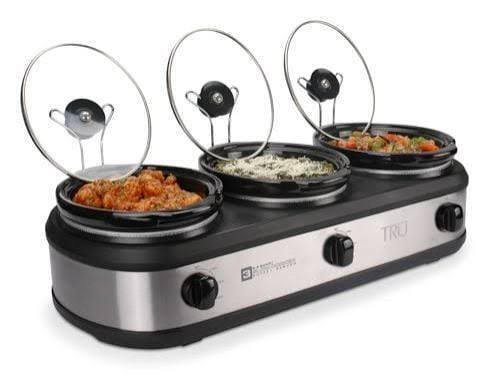
Slow Cooker Keep-Warm Time: Quick Overview
| Situation | Practical Guidance |
|---|---|
| Fully cooked food on Warm | Safe while maintained at 60°C/140°F or above |
| Best quality | Usually serve within a few hours |
| Food below 60°C/140°F | Refrigerate within 2 hours |
| Room temperature above 32°C/90°F | Limit unrefrigerated perishable food to 1 hour |
| Cooker switched off | Do not rely on residual warmth for extended holding |
| Power failure after food is fully cooked | Up to 2 hours in the cooker if you are present and know when power failed |
| Cold leftovers | Do not reheat from cold using the slow cooker’s Warm setting |
| Reheated leftovers | Heat to 74°C/165°F first, then transfer to a preheated slow cooker |
| Overnight warm holding | Avoid unless manufacturer specifically supports it and safe temperature is verified |
Is It Safe to Leave Food on Warm for Four Hours?
It can be, provided your slow cooker maintains the food at at least 60°C (140°F) throughout that period.
USDA food-safety guidance states that hot food should be held at 140°F or warmer. Slow cookers are among the appliances that can be used for this purpose.
This means four hours is not automatically unsafe simply because the cooking cycle has finished.
The problem is that “Warm” settings are not identical across all appliances. An older cooker, partially filled pot or malfunctioning appliance may behave differently from a newer model.
If you regularly use your slow cooker for buffet-style serving, check the food periodically with a food thermometer. Do not judge temperature simply by touching the outside of the cooker or seeing steam.
How Does the Keep-Warm Setting Work?
The Low, High and Warm settings have different purposes.
Low and High are cooking settings. The Warm or Keep Warm function is designed to maintain food that has already been completely cooked to a safe temperature.
USDA guidance specifically says not to use the Keep Warm setting to cook raw food.
That distinction matters.
Putting raw chicken and vegetables into a cooker and selecting Warm may allow ingredients to spend too long at temperatures favourable to bacterial growth.
Cook the dish properly first using the setting specified by the recipe and appliance manufacturer. Only then should you switch to Warm.
What Temperature Should a Slow Cooker Maintain on Warm?
The important number to remember is:
60°C (140°F) or higher.
Bacteria that cause foodborne illness can multiply rapidly in the temperature range between approximately 4°C and 60°C (40°F–140°F), commonly called the food-safety “danger zone.”
Once food has been safely cooked, keeping it at or above 60°C helps prevent bacterial growth during hot holding.
A digital food thermometer is inexpensive and removes the guesswork.
Insert it into the thickest or coolest part of the dish rather than measuring only the hot liquid near the side of the pot.
For dishes such as dal, chilli or stew, stir before measuring so the temperature is more evenly distributed.
Can You Leave a Slow Cooker on Warm All Day?
From a food-safety perspective, the key requirement remains maintaining at least 60°C. But food quality becomes another issue.
A dish held for six or eight additional hours may technically remain hot enough while becoming far less enjoyable.
Chicken can become dry or stringy. Vegetables can turn mushy. Pasta and rice may soften excessively. Thick gravies can reduce further, while food around the edges may begin sticking or drying.
For this reason, treat Keep Warm primarily as a short-term serving function, not an automatic extension of the recipe by another eight or ten hours.
Your appliance manual is important here. Some modern slow cookers automatically switch to Warm after completing a programmed cooking cycle and specify how long that function should be used.
Follow the manufacturer’s maximum operating guidance.
Can You Keep Dal, Rajma or Curry Warm in a Slow Cooker?
Yes. Moist dishes are particularly suitable for slow cookers.
Dal, rajma, chole, meat curries, soups and stews generally hold better than foods that dry easily.
Before switching to Warm, make sure the dish has completed its cooking cycle. Keep the lid closed whenever possible because repeatedly opening it releases heat.
Stir occasionally when serving over an extended period, particularly with thick dishes, and verify that the temperature remains at least 60°C.
Be more cautious with dishes containing dairy or ingredients whose texture deteriorates quickly during prolonged heating.
What Happens If You Switch the Slow Cooker Off?
Once the heating element stops operating, the rules change.
A ceramic crock can retain heat for some time, but residual warmth is not reliable long-term temperature control.
If fully cooked perishable food is no longer being kept at a safe hot-holding temperature, refrigerate it promptly. USDA guidance says perishable food should not remain in the danger zone for more than two hours, or one hour when ambient temperature exceeds 32°C.
This second rule is especially relevant during Indian summers.
Do not leave cooked chicken curry in a switched-off cooker from lunch until dinner simply because the pot still feels slightly warm.
What Should You Do During a Power Cut?
Power failures create a special problem because you may not know how far the food temperature has fallen.
If you are home and the food was completely cooked before electricity failed, USDA guidance says it should remain safe for up to two hours in the cooker with the power off.
If cooking was incomplete, finish the food immediately using another available cooking method.
If you were away throughout the cooking period and return to discover that electricity failed, the safest approach is to discard the food because you cannot reliably determine how long it spent at unsafe temperatures.
Never use smell or appearance alone to determine whether questionable food is safe.
Can You Reheat Leftovers on the Warm Setting?
No. The Warm setting is designed for holding hot food, not reheating refrigerated leftovers.
USDA recommends reheating leftovers to 74°C (165°F) using a stove, microwave or conventional oven. Once thoroughly reheated, the food can be transferred to a preheated slow cooker and held at 60°C or above.
This distinction is particularly useful for parties.
If yesterday’s rajma is being served to guests today, heat it properly first rather than putting the cold container into a slow cooker on Warm several hours before everyone arrives.
How to Store Slow Cooker Leftovers Safely?
When serving is finished, do not leave a large crock full of food sitting on the kitchen counter to cool completely.
Divide leftovers into smaller, shallow containers so they cool quickly and refrigerate them within two hours.
Do not place food in one extremely deep container where the centre can remain warm for a long time.
Most cooked leftovers should generally be eaten within three to four days when properly refrigerated. If you will not use them within that period, freezing may be a better option.
Practical Slow Cooker Routine for Parties
If guests are arriving at 8 PM, plan for your dish to finish cooking relatively close to serving time rather than completing at noon.
Once cooking finishes, verify doneness and switch to Warm. Keep the lid closed and check that the food remains at or above 60°C.
Serve smaller amounts when practical instead of repeatedly leaving the entire meal exposed.
Once everyone has finished eating, transfer leftovers promptly to shallow containers and refrigerate them instead of leaving the cooker running overnight.
This gives you the convenience of slow-cooker serving without unnecessarily compromising food quality.
FAQs
Q1. Can I keep food warm in a slow cooker for 6 hours?
A. Potentially, yes, if the food was fully cooked first and remains continuously at 60°C (140°F) or above. However, texture and flavour may deteriorate during such a long holding period. Check your appliance manufacturer’s instructions as well.
Q2. Can I leave my slow cooker on Warm overnight?
A. It is better not to make overnight holding a routine unless the appliance manufacturer specifically permits it and you can verify safe hot-holding temperatures. Even when temperature remains safe, prolonged heating can significantly reduce food quality.
Q3. How long can food sit in a slow cooker after it is turned off?
A. Once the food is no longer maintained at 60°C or above, the normal two-hour food-safety rule becomes important. In temperatures above 32°C, that limit drops to about one hour. Refrigerate leftovers promptly rather than relying on residual heat.
Q4. Can I put refrigerated leftovers directly into a slow cooker to reheat them?
A. A slow cooker is not recommended for reheating cold leftovers because they may warm too slowly. Reheat leftovers rapidly on the stove, in a microwave or conventional oven to 74°C (165°F), then transfer them to a preheated slow cooker if you need to keep them hot.